Tag: nicotine addiction

  • The Real Facts on Smokeless Tobacco

    The Real Facts on Smokeless Tobacco

    TLDR: The Quick Hits on Smokeless Tobacco

    • It's Not Safe: Think of it as trading lung cancer for aggressive mouth cancer. Smokeless tobacco is packed with at least 28 cancer-causing chemicals.
    • Super Addictive: A single "dip" can deliver 3-4 times more nicotine than a cigarette. This makes it incredibly hard to quit.
    • It's a Chemical Cocktail: Beyond nicotine, it contains things like polonium-210 (a radioactive element), lead, and arsenic.
    • Serious Health Risks: Major links to cancers of the mouth, throat, and pancreas, plus severe gum disease, tooth loss, and heart problems.
    • Myths Busted: It is NOT a safe way to quit smoking. It just swaps one addiction for another, often more intense, one.

    Let's be clear from the start: smokeless tobacco is not a safe alternative to cigarettes. It’s a highly addictive product that comes in many forms. It's packed with harmful chemicals linked directly to cancer and a host of other serious health problems.

    There's a common and dangerous myth that if there’s no smoke, there’s no harm. This couldn't be further from the truth. While you aren't inhaling smoke, you are absorbing potent doses of nicotine and dozens of cancer-causing agents straight into your bloodstream through the lining of your mouth.

    So, what exactly is smokeless tobacco? Think of it as a broad category covering any tobacco product that you don't have to light on fire. These products deliver nicotine in different ways, but the end result is the same: addiction and exposure to dangerous toxins.

    Your Quick Guide to Product Types

    The main differences between smokeless products really come down to how the tobacco is processed and how you use it. Some are chewed, some are "dipped," and others simply dissolve.

    To give you a clearer picture, here’s a quick rundown of the most common types you’ll see.

    A Quick Look at Common Smokeless Tobacco Products

    This table breaks down the basics of each product type, from its form to how it's typically used.

    Product Type Common Form Method of Use
    Chewing Tobacco Loose leaves, plugs, or twists of dried tobacco Placed between the cheek and gum; user chews or holds it in place.
    Snuff (Dip) Finely ground, moist tobacco sold in cans A "pinch" is placed between the lower lip or cheek and the gum.
    Snus Moist powder, often sold in small teabag-like pouches Placed between the upper lip and gum; doesn't require spitting.
    Dissolvables Tobacco shaped into lozenges, strips, or sticks Placed in the mouth where they dissolve completely.

    As you can see, while the delivery method changes, the core concept remains the same. The goal is direct absorption of tobacco's chemical payload through the tissues in your mouth.

    What’s Actually Inside Smokeless Tobacco?

    It’s easy to think of smokeless tobacco as just dried leaves, a more "natural" alternative to cigarettes. But that's a dangerous oversimplification. In reality, it's a chemical cocktail engineered to deliver an intense hit of nicotine.

    This stuff isn't just tobacco. It contains at least 28 different chemicals known to cause cancer, called carcinogens. The most infamous of these are tobacco-specific nitrosamines (TSNAs), which form when the tobacco is cured and can directly damage your DNA.
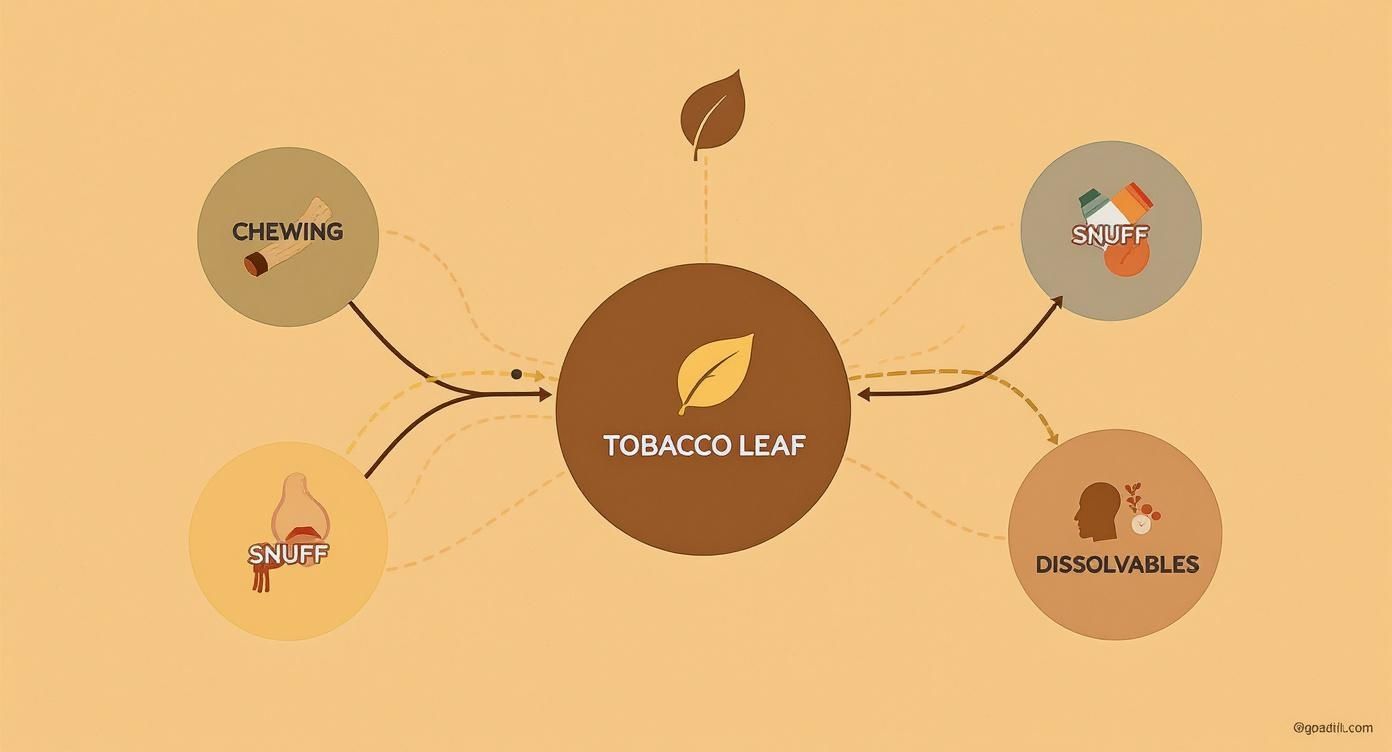
    Infographic about facts on smokeless tobacco

    As the infographic shows, it doesn't matter if it's chewing tobacco, snuff, or dissolvable products. They all come from the same plant and carry the same fundamental dangers.

    Nicotine: The Addictive Master Key

    Let's be clear: nicotine is the engine driving smokeless tobacco use. It's a highly addictive drug that essentially hijacks your brain's reward system. When you use it, nicotine floods your brain with dopamine, creating a temporary feeling of pleasure and calm.

    This is what creates the powerful cycle of craving and use that’s so tough to escape. A single pinch or "dip" of smokeless tobacco can deliver three to four times more nicotine than a single cigarette. Since it’s absorbed directly through the lining of your mouth, the effect is potent and lasts longer, which only reinforces the addiction.

    The real problem is how quickly your brain adapts. It starts to see this artificial pleasure spike as normal and necessary. When nicotine levels dip, your brain panics, triggering withdrawal symptoms like anxiety and irritability, pushing you to reach for more.

    Carcinogens: The Cellular Vandals

    Beyond the addiction, the scariest part is the cancer risk. The main culprits are those tobacco-specific nitrosamines (TSNAs) I mentioned earlier. They're created when tobacco leaves are cured and processed.

    Think of TSNAs as tiny vandals inside your body. Once they get into your system, they can corrupt the DNA inside your cells—your body's fundamental blueprint.

    This DNA damage is exactly how cancer starts. With repeated exposure, these cellular errors can accumulate, causing cells to multiply out of control and form tumors. The areas at most immediate risk are those in direct contact with the tobacco juices:

    • Mouth and Throat: These tissues are constantly exposed, making them ground zero for cancer development.
    • Esophagus: Swallowing the juice, intentionally or not, brings these carcinogens into direct contact with the esophagus.
    • Pancreas: The chemicals enter your bloodstream and can travel to distant organs, like the pancreas, causing damage there.

    And TSNAs aren't the only problem. Smokeless tobacco also contains other toxic substances like polonium-210 (a radioactive element), lead, and arsenic. It's this combination of toxins that poses such a serious, cumulative threat to your health.

    How Smokeless Tobacco Impacts Your Health

    The short version: It bathes your mouth in cancer-causing chemicals. This sets the stage for aggressive oral cancers, severe gum disease, and rampant tooth decay. And the damage doesn't stop there.

    The high dose of nicotine puts your entire cardiovascular system under immense strain. This raises the risk of high blood pressure, heart attack, and stroke.
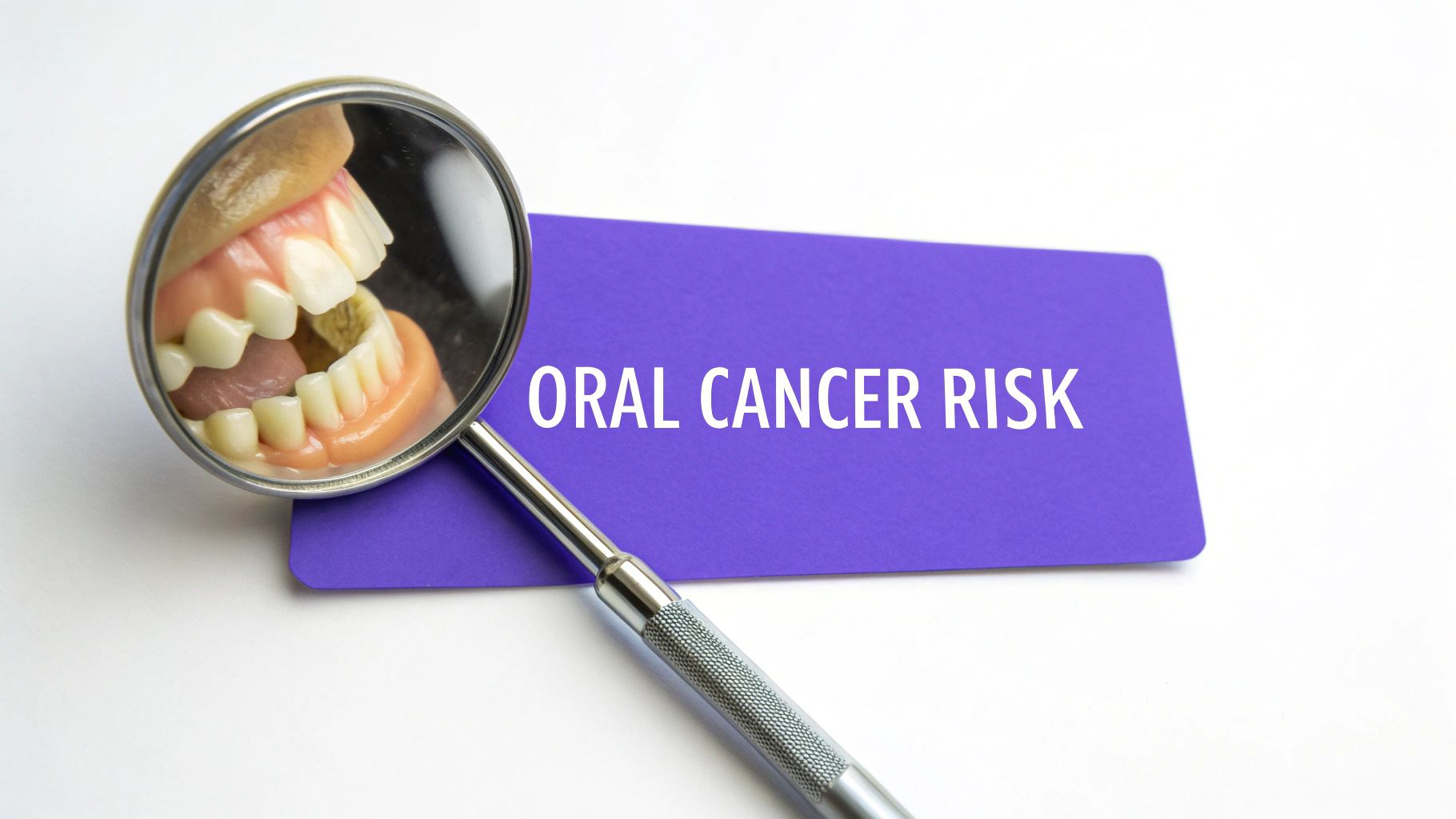
    A medical illustration showing the effects of smokeless tobacco on teeth and gums.

    From the moment smokeless tobacco enters your mouth, it kicks off a cascade of health problems. The damage isn't some far-off risk; it starts right away. Because the product sits directly against the sensitive tissues of your mouth for long periods, it turns your mouth into ground zero for serious disease.

    Imagine what this does to your gums. It's like a constant, low-grade chemical burn that never gets a chance to heal. This chronic irritation causes the gums to pull away from the teeth—a process called gum recession.

    This exposes the sensitive tooth roots and creates deep pockets where harmful bacteria can flourish. The sugars often added to these products act as a food source for bacteria. This creates the perfect storm for severe tooth decay.

    The Clear Link to Oral Cancer

    By far, the most dangerous health consequence is the drastically increased risk of oral cancer. Smokeless tobacco is packed with dozens of carcinogens, like TSNAs, which directly damage the DNA in the cells of your mouth, lips, and throat. With repeated exposure, this damage can cause cells to multiply out of control, leading to cancerous tumors.

    It's a sobering fact: long-term users of smokeless tobacco are up to 50 times more likely to develop cancers of the cheek, gums, and the inner lining of the lips. These are often aggressive, disfiguring cancers that require extensive surgery to treat.

    And the danger isn't limited to one area. Cancer can pop up anywhere the tobacco juice touches—your tongue, the roof of your mouth, or even down your throat.

    Damage Beyond the Mouth

    While the damage inside your mouth is the most obvious, the impact of smokeless tobacco ripples throughout your entire body. Once nicotine and other harmful chemicals are absorbed into your bloodstream, your cardiovascular system takes a significant hit.

    Nicotine acts like a constant stress test for your heart. It instantly jacks up your heart rate and blood pressure, forcing your heart to work much harder than it should. Over time, this relentless strain can lead to serious and life-threatening heart problems:

    • Increased Risk of Heart Attack: Nicotine contributes to the hardening and narrowing of arteries, a condition known as atherosclerosis.
    • Elevated Blood Pressure: Chronic use often leads to persistently high blood pressure, which is a major risk factor for both heart disease and stroke.
    • Higher Stroke Risk: The one-two punch of high blood pressure and damaged blood vessels makes a stroke far more likely.

    Tobacco use, in all its forms, remains one of the world's leading causes of preventable death. It kills over 7 million people every year. Smokeless tobacco is a significant contributor to this global toll.

    You can dig into the latest findings on tobacco's global impact from the World Health Organization. To learn more about the broader connection between nicotine and well-being, check out our guide on the effects of smoking on mental health.

    A Global Snapshot of Smokeless Tobacco Use

    TLDR: Smokeless tobacco is a global issue affecting over 360 million people. The overwhelming majority—more than 90%—live in low- and middle-income countries, especially South Asia. This isn't just a product; it's a practice deeply woven into cultural traditions, creating a complex public health challenge.

    When people in the West think of smokeless tobacco, they might picture dipping tobacco or chew. But that's a tiny part of a much bigger, global story. For millions, these products aren't just an alternative to cigarettes—they're an integral part of the cultural fabric.

    To really understand the facts, we need to zoom out and look at the worldwide patterns. The global map of smokeless tobacco use isn't uniform. It’s marked by intense hotspots where consumption is a normal, everyday activity.

    The Global Hotspots for Use

    The epicenter of smokeless tobacco use is, without a doubt, South and Southeast Asia. In countries like India, Bangladesh, and Pakistan, it has been part of life for centuries. Products like gutka—a mixture of crushed betel nut and tobacco—are as common as a morning cup of coffee is in other parts of the world.

    Globally, the numbers are staggering: more than 360 million people use smokeless tobacco. Over 90% of them live in low- and middle-income countries. This underscores the immense public health burden these nations face.

    Chewing tobacco is so popular that it's projected to capture nearly 72% of the smokeless market share by 2025. This is driven by its low cost, convenience, and deep cultural roots. If you're interested, you can explore the full smokeless tobacco market report.

    It's impossible to overstate the cultural significance here. In many communities, offering a guest some form of smokeless tobacco is a gesture of hospitality, much like offering tea. It’s shared at social events and serves as a daily ritual for millions of workers.

    This deep integration into daily life makes public health initiatives incredibly difficult. You’re not just warning someone about a health risk. You’re asking them to abandon a practice tied to their community's identity and traditions.

    Who Is Most Likely to Use It?

    While the demographics shift from one region to another, some clear trends emerge. Looking at who uses these products helps us understand who is most vulnerable and why.

    Several factors paint a picture of the typical user:

    • Gender: In South Asia, men are by far the predominant users. However, in certain communities, specific products are traditionally used by women as well.
    • Socioeconomic Status: Use is often concentrated among people with lower incomes and less formal education, given how cheap and accessible many products are.
    • Age: People often start young, frequently during adolescence, due to peer pressure and cultural norms.
    • Occupation: It is especially common among manual laborers and long-haul drivers, who use it to fight off fatigue during long workdays.

    Understanding these patterns is key. It reveals that smokeless tobacco use isn't just a random personal choice. It’s a habit deeply connected to the social, cultural, and economic currents that shape people's lives.

    Busting Common Myths About Smokeless Tobacco

    Let's get straight to the point: No, smokeless tobacco is not a safe alternative to cigarettes. It's also a terrible way to try and quit smoking. Using these products simply means you're trading lung damage for a high risk of aggressive oral cancers and a severe nicotine addiction.

    Misinformation about smokeless tobacco is everywhere, making it seem much less harmful than it really is. These myths can trick people into starting or make it harder for them to quit. It's time to set the record straight with some hard facts.

    Myth 1: It’s a Safe Way to Quit Smoking

    The Fact: This is probably the most dangerous myth out there. Instead of lung cancer, you're bathing your mouth, throat, and esophagus in a soup of potent, cancer-causing chemicals. You're just swapping one group of serious health risks for another.

    What’s more, many smokeless products deliver a much bigger nicotine punch than cigarettes. This can deepen your addiction, making it even tougher to break free. Thinking of it as a step down from smoking is like trying to put out a fire with gasoline.

    If you're serious about quitting, your best bet is to look into the best smoking cessation methods that have a proven track record of success.

    The bottom line is simple: you're still feeding a powerful addiction. That isn't quitting; it's just changing the delivery system for the same drug.

    Myth 2: "Natural" or "Herbal" Tobacco Is Harmless

    The Fact: Seeing words like "natural" or "herbal" on a package is pure marketing, not a sign of safety. All tobacco, no matter how it's grown, contains nicotine and cancer-causing chemicals called tobacco-specific nitrosamines (TSNAs). These poisons are part of the tobacco plant itself.

    In some cases, products marketed as "organic" have been found to contain even higher levels of these harmful chemicals. The danger is baked into the tobacco leaf, not the things added to it. Don't let clever marketing fool you.

    Myth 3: It Only Affects Your Mouth

    The Fact: While the damage inside your mouth is the most visible, the harm doesn't stop there. The toxins, especially nicotine, are absorbed directly into your bloodstream. They wreak havoc on your entire body, particularly your cardiovascular system.

    This constant exposure to potent chemicals leads to a whole host of systemic problems.

    • Increased Heart Rate: Nicotine acts as a stimulant, putting a continuous strain on your heart and making it work harder than it should.
    • High Blood Pressure: Over time, this constant stress can lead to chronic hypertension.
    • Increased Risk of Heart Attack and Stroke: The chemicals also contribute to the hardening and narrowing of your arteries (atherosclerosis).

    The damage is anything but localized. Once those toxins hit your bloodstream, they travel everywhere, posing a major threat to your overall health.

    The Marketing Machine Behind Smokeless Tobacco

    The smokeless tobacco industry is a multi-billion dollar business for a reason. It's powered by sophisticated marketing designed to draw in new users—especially young people. The industry uses enticing flavors and links its products to powerful ideas of masculinity, independence, and sports.

    An artistic photo showing modern, sleek packaging for smokeless tobacco products displayed in a store.

    Behind the continued popularity of smokeless tobacco is a relentless and calculated marketing effort. Companies pour billions into crafting a specific image for their products. These strategies are about weaving these products into the fabric of certain lifestyles and cultural identities.

    Fundamentally, this marketing playbook has two main objectives. The first is to recruit new, often young, users. The second is to normalize the use of these products, making them seem like a perfectly acceptable part of everyday life.

    The Power of Flavor and Image

    One of the industry's most successful tactics is the use of appealing flavors. Mint, wintergreen, cherry, and other fruit flavors act as a smokescreen. They mask the raw, bitter taste of tobacco itself.

    This simple trick makes it far easier for a first-time user to try the product. When you make a product taste more like candy, you can get new users hooked before they grasp the long-term dangers.

    Beyond flavor, the marketing leans heavily on identity. Advertisements are often filled with rugged, masculine archetypes—think cowboys, pro athletes, and soldiers. This creates a direct line between the product and ideals like strength, freedom, and patriotism.

    This type of branding is incredibly powerful. It's not just selling a product; it's selling an identity. The underlying message is simple: using this product signals that you're part of a tough, independent tribe.

    This imagery forges a strong psychological bond with users. For many, the act of using smokeless tobacco becomes a ritual. It's a way to signal that they belong and to reinforce the image they have of themselves.

    Following the Money Globally

    The financial payoff from these strategies is staggering. The global market for smokeless tobacco isn't just holding steady; it's growing. A lot of this growth is driven by the mistaken belief that smokeless products are a safer alternative to cigarettes.

    Just look at the numbers. In 2023, the smokeless tobacco market was valued at around USD 19.3 billion. Projections show it climbing to nearly USD 27.6 billion by 2032.

    This expansion shows how successful the industry has been at positioning its products. You can dive deeper into smokeless tobacco market growth trends to see the full financial picture. This economic momentum keeps the marketing machine running at full speed.

    Common Questions About Smokeless Tobacco

    Let's cut right to the chase: No, smokeless tobacco isn't a safe alternative to smoking. It's just swapping one set of serious health risks for another. And yes, it's intensely addictive—sometimes even more so than cigarettes.

    People often have a lot of questions about smokeless tobacco, especially when trying to understand the real risks. Let's clear up some of the most common myths and concerns with straight facts.

    The biggest question is whether "dipping" is safer than lighting up. While you avoid inhaling smoke, you’re exposing yourself to a whole different lineup of dangers. Smokeless tobacco is a major cause of aggressive cancers in the mouth, throat, esophagus, and pancreas.

    Is It Really Addictive?

    Without a doubt. Smokeless tobacco is loaded with nicotine. A single dip or chew can deliver three to four times more nicotine than one cigarette. This intense dose makes the addiction incredibly powerful and often harder to break than a cigarette habit.

    This isn't just a "bad habit"—it's a physiological dependency. The nicotine floods your brain, hijacking its reward pathways and creating a relentless cycle of cravings. If you're curious, you can learn more about the various methods for tobacco use testing.

    The reason quitting is so tough is that nicotine withdrawal is very real. When you try to stop, you're not just fighting a craving. You're dealing with physical and mental symptoms like irritability, anxiety, and trouble concentrating.

    Are There Effective Ways to Quit?

    Yes, and many people have successfully quit for good. But it rarely happens without a solid plan. Going "cold turkey" is notoriously difficult because of the intense withdrawal that high-nicotine products create.

    The most successful quitting strategies usually combine a few different tactics:

    • Behavioral Support: Getting help from a counselor or joining a support group gives you real-world tools to handle triggers and ride out cravings without giving in.
    • Nicotine Replacement Therapy (NRT): Using things like nicotine gum, patches, or lozenges can be a game-changer. They give your body the nicotine it craves without the cancer-causing chemicals, letting you step down your dependence gradually.

    Your best first step is to talk to a doctor or call a quit-line. A healthcare professional can help you build a personalized plan that dramatically boosts your odds of success.


    At Nic Facts, our mission is to provide clear, objective, and evidence-based information on nicotine. We are a non-profit educational project dedicated to ensuring you have access to the facts. To learn more, visit https://nicfacts.org.

  • 10 Best Smoking Cessation Methods Proven to Work in 2025

    10 Best Smoking Cessation Methods Proven to Work in 2025

    TLDR: The Best Ways to Quit Smoking
    Quitting is a personal journey, not a one-size-fits-all race. The most successful methods often combine strategies:

    • Medical Aids: Nicotine Replacement Therapy (NRT) like patches or gum, and prescription pills (Varenicline, Bupropion) tackle physical cravings by managing your brain's chemistry. Think of them as a safety net that catches you during intense withdrawal.
    • Mental Game: Therapies like CBT help you rewire the habits and triggers linked to smoking. This is like training a muscle; you learn new ways to handle stress and boredom without reaching for a cigarette.
    • Support System: You don't have to go it alone. Counseling, support groups, and even quit-smoking apps provide accountability and the crucial reminder that you're not the only one fighting this battle.
    • The Golden Rule: Combining these approaches (e.g., using a patch while attending therapy) creates a powerful, multi-pronged attack on addiction and dramatically increases your chances of quitting for good.

    Quitting smoking is one of the most significant steps you can take for your health. The journey often feels like navigating a dense, confusing forest. With countless options available, from patches and pills to therapy and alternative treatments, choosing the right path can be overwhelming.

    This guide is designed to be your compass, cutting through the noise. It provides a clear, evidence-based overview of the best smoking cessation methods available today.

    We understand that what works for one person may not work for another. That’s why this article avoids a one-size-fits-all approach. Instead, we present a roundup of ten distinct strategies, each backed by scientific research.

    Throughout this guide, you will find practical, actionable advice for each method. We will explore everything from Nicotine Replacement Therapy (NRT) to behavioral approaches like Cognitive Behavioral Therapy (CBT). We will also cover combination therapy, support groups, and even the "cold turkey" approach.

    Our goal is to empower you with knowledge. Understanding how each method works lets you build a personalized quit plan. This roadmap will equip you to make an informed decision and start your journey toward a healthier, smoke-free life.

    1. Nicotine Replacement Therapy (NRT)

    Nicotine Replacement Therapy (NRT) is one of the most widely recommended methods for quitting smoking. It operates on a simple principle: address the physical addiction separately from the psychological habit. NRT delivers controlled doses of nicotine without the thousands of other harmful chemicals in tobacco smoke.

    Imagine trying to quit caffeine, smoking, and a sugar habit all on the same day—it's too much. NRT lets you tackle the smoking habit first by quieting the screaming demand for nicotine. This makes the mental battle much more winnable.

    1. Nicotine Replacement Therapy (NRT)

    How NRT Works

    Think of NRT as a nicotine "step-down" program. Using products like patches, gums, or lozenges satisfies your brain's demand for nicotine. This significantly reduces the severity of withdrawal.

    The goal is to sever the link between the action of smoking and the nicotine reward. Over time, you follow a schedule to lower your NRT dosage, weaning your body off nicotine altogether. This is why NRT is considered one of the best smoking cessation methods.

    Actionable Tips for Using NRT

    To maximize your success with NRT, a strategic approach is key.

    • Combine Methods for Better Control: Many successful quitters use a long-acting patch for a steady nicotine level. They then use a short-acting product like gum or a lozenge to manage sudden, intense cravings.
    • Get the Dosage Right: Your starting dose should match your smoking habits. A heavy smoker will need a higher-dose patch than a light smoker.
    • Follow the Weaning Schedule: NRT products come with a clear step-down schedule, typically lasting 8-12 weeks. Sticking to this is vital to prevent transferring your dependence to the NRT product.

    2. Prescription Medications (Varenicline and Bupropion)

    For smokers who need a more powerful intervention, prescription medications offer a non-nicotine route to quitting. These FDA-approved drugs work within the brain to disrupt the cycle of nicotine addiction. They tackle the chemical side of dependence under medical supervision.

    Think of these medications as a bouncer at a club in your brain. They either block nicotine from getting to the VIP receptors or they make the party less enjoyable. This makes cigarettes seem far less appealing.

    How Prescription Medications Work

    These medications rewire your brain's response to nicotine. Varenicline (Chantix) partially activates nicotine receptors. This both reduces withdrawal and blocks the pleasurable rush from cigarettes.

    Bupropion (Zyban) is an antidepressant that also reduces nicotine cravings. Both are recognized as top smoking cessation methods. They directly address the neurological drivers of addiction.

    Actionable Tips for Using Prescription Medications

    Success with these medications hinges on proper use and medical guidance. They are powerful tools that require a specific approach.

    • Start Before You Stop: You typically begin taking these medications 1-2 weeks before your quit date. This allows the drug to build up in your system, so it's working when you have your last cigarette.
    • Combine with Behavioral Support: The medication handles the chemical battle, but you still need to break behavioral habits. Combining your prescription with counseling can significantly increase success.
    • Communicate with Your Doctor: Be honest with your healthcare provider about your medical history and any side effects. Consistent communication ensures your treatment is both safe and effective.

    3. Cognitive Behavioral Therapy (CBT)

    Cognitive Behavioral Therapy (CBT) tackles smoking cessation from a psychological angle. It operates on the idea that smoking is a learned behavior reinforced by specific thoughts and situations. CBT helps you identify these triggers and rewire your responses to them.

    CBT is like being a detective of your own mind. You uncover the clues (triggers) that lead to the crime (smoking). Then, you create a new plan to avoid the crime altogether.

    How CBT Works

    Think of your smoking habit as a deeply ingrained script your brain runs. A stressful meeting ends, and the script says "time for a cigarette." CBT helps you rewrite that script.

    A therapist works with you to uncover your unique triggers. Once identified, you develop a toolkit of alternative responses. By consistently applying these new behaviors, you dismantle the old associations.

    This makes it one of the best smoking cessation methods for tackling psychological addiction. The connection between smoking and mental health is strong, and CBT provides tools to manage both. Learn more about smoking's effects on mental health here.

    Actionable Tips for Using CBT

    To get the most out of CBT, active participation is essential. It's a collaborative process between you and your therapist.

    • Start a Smoking Diary: Before you quit, log every cigarette. Note the time, place, and your mood. This data is invaluable for pinpointing your personal triggers.
    • Practice Coping Strategies Early: Don't wait until a massive craving hits. Practice your coping skills, like mindfulness, in low-stress situations first.
    • Set Specific, Measurable Goals: Work with your therapist to set concrete goals. For example, "When I feel stressed after work, I will walk around the block twice instead of smoking."

    4. Combination Therapy (Multi-Modal Approach)

    Combination Therapy supercharges your quit attempt by tackling addiction from all angles. It understands that smoking is a complex problem with physical, psychological, and behavioral components. Using multiple strategies at once creates a powerful, synergistic effect.

    This approach is like assembling a team of superheroes to fight a villain. One hero is good, but a full team with different powers is unstoppable. Each therapy method targets a different weakness of the addiction.

    How Combination Therapy Works

    Think of quitting smoking like defeating a multi-headed monster. A nicotine patch (NRT) manages baseline physical cravings. Meanwhile, behavioral counseling helps you develop new coping mechanisms for stress.

    This integrated strategy is one of the best smoking cessation methods because it leaves no stone unturned. The NHS often recommends combining a long-acting patch, a short-acting NRT product, and behavioral support. This multi-pronged attack makes relapse far less likely.

    Actionable Tips for Using Combination Therapy

    A successful combination plan is a personalized one. It requires careful planning and commitment.

    • Design a Plan with a Professional: Don't mix and match methods on your own. Work with a doctor to create a personalized plan that combines the right tools for your specific needs.
    • Synchronize Your Start: Begin all components of your plan around the same quit date. This creates a strong, unified front against nicotine from day one.
    • Leverage Digital Support: Incorporate technology into your approach. Explore the best quit smoking apps to track progress, manage cravings, and connect with a community.

    5. Behavioral Counseling and Support Groups

    Quitting smoking isn't just a physical battle; it's a profound psychological challenge. Behavioral Counseling and Support Groups tackle this head-on. They provide guidance, accountability, and the power of shared experience.

    This method addresses the "why" you smoke, not just the "what." It's like having a team of coaches and cheerleaders. They give you the game plan and root for you when things get tough.

    How Counseling and Support Works

    Professional counselors help you identify your personal smoking triggers. They help you develop concrete strategies to manage them without a cigarette. This makes it one of the best methods for tackling the root causes of the habit.

    Support groups, like Nicotine Anonymous, operate on the principle that "we are stronger together." Sharing struggles and celebrating victories with others on the same path creates a powerful sense of community. This reduces feelings of isolation that can lead to relapse.

    Actionable Tips for Using Counseling and Support

    Active participation is the key to unlocking the full potential of this method.

    • Combine with Other Methods: Behavioral support is incredibly effective when paired with NRT or prescription medication. One manages physical cravings while the other helps you dismantle the psychological addiction.
    • Find Your Fit: Not every group is right for every person. Explore options like the 12-step program of Nicotine Anonymous, telephone quitlines, or online forums.
    • Engage Actively: Don't just be a passive listener. Share your experiences, ask for advice, and offer support to others.

    6. Mindfulness and Meditation-Based Interventions

    Mindfulness and meditation are a newer, yet effective, approach to quitting smoking. This method targets the psychological triggers that drive the habit. It operates on the principle of awareness, teaching you to observe cravings without reacting.

    It's like learning to surf. You can't stop the waves (cravings) from coming. But you can learn to ride them gracefully until they pass, instead of letting them crash over you.

    Mindfulness and Meditation-Based Interventions

    How Mindfulness Works

    Think of your smoking habit as a program running on autopilot. A trigger appears, and the program automatically runs: "light a cigarette." Mindfulness acts as a manual override, giving you a pause between the trigger and the action.

    Through practices like mindful breathing, you learn to notice a craving as just a sensation, not a command. Studies have shown mindfulness can be more effective than standard treatments. This makes it a powerful mental tool among the best smoking cessation methods.

    Actionable Tips for Using Mindfulness

    Integrating mindfulness isn't about emptying your mind; it's about becoming more aware.

    • Start Small and Before Your Quit Date: Begin practicing with guided meditations for just 5-10 minutes a day. Apps like Headspace or Calm often have specific quit-smoking programs.
    • Notice Cravings Non-Judgmentally: When a craving hits, don't fight it. Simply acknowledge it: "Ah, there is a craving to smoke." Observe how it feels and watch it rise and fall like a wave.
    • Combine With Other Methods: Mindfulness works exceptionally well when paired with other methods like NRT. This gives you both a physical and mental toolkit to succeed.

    7. E-Cigarettes and Vaping as Harm Reduction

    E-cigarettes, or vapes, are a controversial tool in smoking cessation. This method operates on a harm reduction principle. It replaces inhaling burning tobacco with a less harmful, though not risk-free, alternative.

    Vaping is like taking a bridge instead of trying to swim across a dangerous river. The bridge isn't the final destination, but it's a much safer way to get to the other side. The goal is to eventually get off the bridge, too.

    E-Cigarettes and Vaping as Harm Reduction

    How E-Cigarettes Work for Cessation

    The core idea is to substitute the habit. Vaping mimics the hand-to-mouth action and sensation of inhaling. This addresses both physical and behavioral components of the addiction.

    A smoker can switch completely to vaping, severing their relationship with combustible tobacco. From there, the user can gradually taper their nicotine strength. The ultimate goal is to decrease the nicotine to zero and stop vaping altogether.

    Actionable Tips for Using E-Cigarettes

    Successfully using vaping to quit requires a deliberate plan, not just a simple swap.

    • Set a Clear End Date: Treat vaping as a transitional phase. Before you start, decide on a timeline (e.g., 3-6 months) for quitting all nicotine products.
    • Create a Tapering Schedule: Don't get stuck on a high nicotine level. Methodically step down the nicotine strength in your e-liquid every few weeks until you reach 0mg.
    • Choose Quality Products: Not all devices are created equal. Research reputable brands and purchase from trusted vendors to ensure you are not inhaling harmful additives.

    8. Motivational Interviewing and Readiness Assessment

    Motivational Interviewing (MI) is a counseling style designed to strengthen your own motivation to change. Instead of telling you why you should quit, a counselor helps you explore your own ambivalence. It's a guided conversation that helps you find your "why" from within.

    This process is like having a guide help you find a hidden treasure map inside yourself. The guide doesn't tell you where the treasure is. They just help you read the map you already had.

    How MI Works

    Motivational Interviewing is a partnership rather than a lecture. The counselor acts as a guide, asking open-ended questions. This encourages you to articulate why you want to change and how you might do it.

    This process helps you weigh the pros and cons of smoking in your own life. It strengthens your resolve. This personalized approach makes it one of the best methods for building a durable foundation for change.

    Actionable Tips for Using MI

    You can apply MI principles yourself to build readiness before your quit attempt.

    • Explore Your Ambivalence: On paper, create two columns: "What I like about smoking" and "What I don't." Seeing the conflict can clarify your motivations.
    • Identify Your 'Why': What is the single most important reason you want to quit? Write it down and place it somewhere you'll see it every day.
    • Envision Your Future: Spend a few minutes each day imagining your life as a non-smoker. Focus on the positive changes.

    9. Acupuncture and Alternative Therapies

    Acupuncture and other alternative therapies offer a holistic approach to quitting smoking. They focus on restoring the body's natural balance, which is believed to be disrupted by nicotine addiction. Many individuals report benefits in managing withdrawal and cravings.

    Think of your body's energy pathways like a traffic jam caused by addiction. Acupuncture acts like a traffic controller, clearing the blockages. This helps everything flow smoothly again, reducing the stress and irritation of the jam.

    How Acupuncture Works for Quitting

    Acupuncture involves inserting ultra-thin needles into specific points (acupoints). This is thought to reduce cravings, calm irritability, and lessen anxiety. The process helps restore proper energy flow.

    Auricular acupuncture, which focuses on points in the ear, is popular for addiction treatment. The goal is to stimulate the release of endorphins, the body's natural "feel-good" chemicals. This can help offset the dopamine crash during nicotine withdrawal.

    Actionable Tips for Using Alternative Therapies

    Approach these complementary methods with a clear strategy and realistic expectations.

    • Find a Qualified Practitioner: Your practitioner’s expertise matters. Look for a licensed acupuncturist (L.Ac.) with specific experience in addiction and smoking cessation.
    • Combine with Behavioral Support: Use acupuncture to manage physical withdrawal symptoms. At the same time, work on breaking psychological habits through counseling or a support group.
    • Be Realistic and Patient: The effects may be subtle or cumulative. Commit to a full course of treatment as recommended by your practitioner.

    10. Cold Turkey (Abrupt Cessation) with Preparation

    The "cold turkey" method involves stopping smoking abruptly, without NRT or medication. While difficult, this all-or-nothing approach can be effective for some. This is especially true when it's a well-prepared, strategic plan.

    Going cold turkey is like ripping off a bandage. It's intense and painful for a short period. But for some, it's better than the slow, prolonged discomfort of peeling it off bit by bit.

    How Cold Turkey Works

    This method bypasses the weaning process and directly confronts the addiction at once. The core idea is to make a clean break. For some, the finality of this decision is a powerful motivator.

    Success hinges almost entirely on mental fortitude and a robust support structure. Without preparation, spontaneous attempts often fail due to the intensity of withdrawal. A planned approach transforms it into one of the most empowering smoking cessation methods for the right person.

    Actionable Tips for a Prepared Cold Turkey Quit

    Quitting cold turkey isn't just about throwing your cigarettes away. It's about building a fortress of support and strategy first.

    • Create a "Quit Day" Plan: Set a firm date and prepare for it. Clean your house and car to remove the smell of smoke, and dispose of all smoking paraphernalia.
    • Build Your Support Network: Inform friends and family of your plan and ask for their support. Join a support group, either online or in-person.
    • Plan for Cravings: The first 72 hours are typically the most intense. Plan activities to distract yourself and have a go-to person you can call. Consider getting tested; seeing nicotine leave your system can be a huge motivator. You can learn more about tobacco use testing here.

    Comparison of 10 Smoking Cessation Methods

    Method Implementation complexity Resource requirements Expected outcomes (approx.) Ideal use cases Key advantages
    Nicotine Replacement Therapy (NRT) Low–Medium (OTC or Rx; simple protocols) Patches/gum/lozenges/sprays; moderate adherence; low–moderate cost 25–35% quit rate at 6 months; reduces withdrawal Smokers who want medical aid without Rx or to manage cravings Controlled nicotine dosing; multiple formats; reduces withdrawal
    Prescription Medications (Varenicline, Bupropion) Medium (prescription required; monitoring) Doctor visits, prescriptions, monitoring for side effects; insurance may help cost Varenicline ~50–60% at 6 months; higher with combination Heavy smokers, prior quit failures, those needing pharmacologic support Highest medication success; targets cravings pharmacologically
    Cognitive Behavioral Therapy (CBT) Medium–High (structured multi-session therapy) Trained therapist, time commitment, possible cost/insurance ~30–40% when combined; strong relapse prevention Those needing skills to manage triggers and habits Directly addresses psychological addiction; teaches coping strategies
    Combination Therapy (Multi-modal) High (coordinated multi-component plan) Multiple providers (meds + counseling + NRT), higher cost, close coordination 60–70% at 6 months (highest overall) Severe dependence or repeated relapses; those wanting comprehensive care Tackles physical, behavioral, psychological aspects; best outcomes
    Behavioral Counseling & Support Groups Low–Medium (regular meetings or sessions) Group/individual counseling, peer support, usually low-cost or free 25–35% with regular participation People needing social support, accountability, or peer learning Strong social support, accessibility, practical strategies
    Mindfulness & Meditation Interventions Low–Medium (practice-based; self-guided or led) Apps/classes, daily practice time; minimal cost 20–30% as primary; higher when combined with other methods Those seeking stress reduction and craving awareness No meds/side effects; improves stress management and awareness
    E‑Cigarettes / Vaping (Harm Reduction) Low–Medium (device use; behavioral shift) Device, e‑liquid supplies, variable quality/regulation; ongoing cost 10–20% complete cessation; useful for harm reduction rather than guaranteed quit Smokers resistant to other methods aiming to reduce harm Replaces smoking ritual; reduces combustion toxin exposure
    Motivational Interviewing & Readiness Assessment Medium (skilled, client-centered counseling) Trained practitioner; time for sessions and follow-up 30–45% when combined with other methods Ambivalent smokers who need to increase readiness and commitment Enhances intrinsic motivation; personalized engagement
    Acupuncture & Alternative Therapies Medium (practitioner-dependent; multiple sessions) Licensed practitioner, out-of-pocket costs, repeated visits 15–25% (mixed evidence; often no better than placebo) Individuals preferring complementary/non-pharma approaches Low pharmaceutical side effects; holistic appeal for some users
    Cold Turkey (Abrupt Cessation with Preparation) Low implementation but high behavioral difficulty Minimal cost; strong social/behavioral support recommended 3–5% typical; better only with intensive support Highly motivated individuals preferring immediate cessation No medication costs or dependency transfer; rapid nicotine elimination

    Designing Your Personal Quit Plan: The Path Forward

    Quitting smoking is one of the most rewarding decisions you can make. We've explored the best smoking cessation methods, from medical interventions to psychological strategies. The path to a smoke-free life is a personalized journey, not a one-size-fits-all road.

    The key takeaway is this: synergy is your greatest asset. While any single method can increase your chances, combining them creates a far more robust strategy. Think of it as building a support structure; a network of supports is much harder to topple.

    Synthesizing the Strategies for Maximum Impact

    The most effective quit plans integrate elements from multiple categories. This creates a holistic approach that addresses the physical, psychological, and behavioral facets of addiction.

    • Address the Physical: NRT and prescription medications ease the neurochemical storm in your brain. This gives you the stability to focus on behavioral changes.
    • Rewire the Psychological: CBT is your toolkit for deconstructing habits and emotions linked to smoking. It helps you develop new, healthier coping mechanisms.
    • Build a Support System: You don't have to navigate this path alone. Counseling and support groups provide accountability, empathy, and motivation.

    Key Insight: Your quit plan is a living document, not a rigid contract. The ability to adapt is crucial. Be prepared to reassess and modify your approach.

    Actionable Next Steps: Building Your Blueprint

    Information is only powerful when put into action. Here is a step-by-step approach to designing your personal quit plan.

    1. Consult a Professional: Your first step is to speak with a healthcare provider. They can assess your health and help you choose the right medical aids.
    2. Conduct a "Smoking Audit": Before your quit date, track your smoking habits. This audit will reveal your personal high-risk triggers.
    3. Create a Combination Strategy: Select a primary method and at least one supporting method. A powerful combination could be a nicotine patch, CBT sessions, and a support buddy.
    4. Set a Quit Date and Prepare: Choose a specific date. Prepare your environment by removing all smoking paraphernalia and stocking up on healthy snacks.

    Mastering these concepts is about reclaiming your health, finances, and freedom. Each day without a cigarette is a victory. This journey is a profound investment in your future self, and you can successfully complete it.


    For a deeper, evidence-based understanding of nicotine's effects and the science behind quitting, explore the resources at Nic Facts. Our mission is to provide clear, unbiased information to empower you on your journey to a healthier life. Find comprehensive guides and data-driven insights at Nic Facts.