TLDR: The Quick Facts
- Does quitting smoking cause depression? No, quitting doesn't cause clinical depression. It can, however, trigger a temporary period of low mood and irritability due to nicotine withdrawal.
- What's happening in my brain? Nicotine hijacks your brain's reward system, causing a spike in the "feel-good" chemical, dopamine. When you quit, your brain experiences a temporary dopamine crash, which is why you feel down.
- How long does this last? The worst of the mood swings usually peak within the first week and get much better over the next 2-4 weeks as your brain chemistry rebalances.
- The long-term effect is positive? Absolutely. Research consistently shows that people who successfully quit smoking experience a significant decrease in long-term anxiety and depression.
Let's get straight to the point: Does quitting smoking cause depression? The short answer is no.
What you might feel, however, is a temporary bout of irritability, low mood, and general crabbiness. This isn't clinical depression; it's a completely normal part of nicotine withdrawal. Think of it as your brain recalibrating after depending on nicotine for so long.
For the vast majority of people, kicking the habit actually leads to better long-term mental health.

Navigating the Mood Swings of Quitting
The fear that putting down cigarettes will send you spiraling into depression is a real and understandable worry. After all, many smokers rely on nicotine as a quick fix for stress. The idea of giving up that crutch is daunting.
But here’s the crucial thing to remember: the temporary blues of withdrawal are not the same as a long-term mental health diagnosis.
Nicotine withdrawal can feel pretty rough, and the symptoms—like feeling irritable, sad, or just plain down—can absolutely mimic depression. What's really happening is a temporary chemical rebalancing act. Your brain got used to nicotine triggering its "feel-good" chemicals and now has to remember how to produce them on its own again.
Grasping this distinction is a game-changer for anyone trying to quit. When you understand the "why" behind what you're feeling, it becomes much less scary and far more manageable. The first few weeks might be tough, but the evidence is clear.
People who successfully quit often report:
- A significant drop in long-term anxiety
- Lower overall rates of depression
- A much more stable and positive mood over time
The emotional storm of withdrawal feels intense, but it passes. In contrast, successfully quitting smoking is one of the single best things you can do for your long-term mental well-being, paving the way for lasting improvements in your mood and resilience. That initial discomfort is just the bridge to a much healthier, happier future.
How Nicotine Rewires Your Brain
Think of nicotine as a key that doesn't quite fit the lock but can still force it open. The "lock" is a receptor in your brain for a natural chemical called acetylcholine. Nicotine happens to be shaped just enough like acetylcholine to pop into these receptors and activate them.
But here’s the twist: when nicotine hits these receptors, it triggers a flood of a different chemical called dopamine. This is your brain's "feel-good" neurotransmitter, the one responsible for pleasure and motivation. That quick hit of pleasure and focus after a cigarette? That’s the dopamine surge.
Your brain is smart and loves to maintain balance. When it's constantly flooded with nicotine-induced dopamine, it starts to make some changes to cope with the overload.
First, it reduces its own natural dopamine production, almost like it's saying, "If we're getting this rush from an outside source, I'll just dial back my own efforts." Second, it actually grows more nicotine receptors, a process known as upregulation.
This creates a tricky situation where your brain is now physically rewired. It has fewer of its own feel-good chemicals and a lot more landing spots just waiting for the next hit of nicotine. This is the biological bedrock of addiction.
The Dopamine Crash: What Happens When You Quit
So, what happens the moment you decide to stop smoking? You've cut off the external supply.
Suddenly, those extra receptors are empty, and your brain's own dopamine production is still on low. This creates a sharp and immediate dopamine deficit. Your brain is essentially starved of the chemical it has come to associate with feeling normal.
This is the core of nicotine withdrawal; it's not a matter of willpower, but a genuine chemical imbalance. Your brain is left scrambling to get its internal dopamine factory back online, but that takes time.
During this recalibration period, you're not just "missing" cigarettes. Your brain is physically and chemically out of sorts, leading directly to the low mood, brain fog, and intense irritability that so many people experience.
This neurochemical roller coaster is precisely why the early days of quitting can feel so much like a bout of depression. The systems that regulate your mood and motivation have been temporarily taken offline.
The Brain’s Slow Path to Recovery
The good news? This isn't permanent. Your brain is incredibly resilient and immediately begins the process of healing itself.
As you stay away from nicotine, your brain slowly begins to reverse the changes it made. The extra nicotine receptors start to disappear, and your natural dopamine production gradually ramps back up. It’s like a factory that's been dormant slowly powering up its machinery again.
This healing process is what you experience as withdrawal symptoms. Here’s what’s really going on:
- Intense Cravings: Those empty receptors are screaming for the nicotine they've become used to.
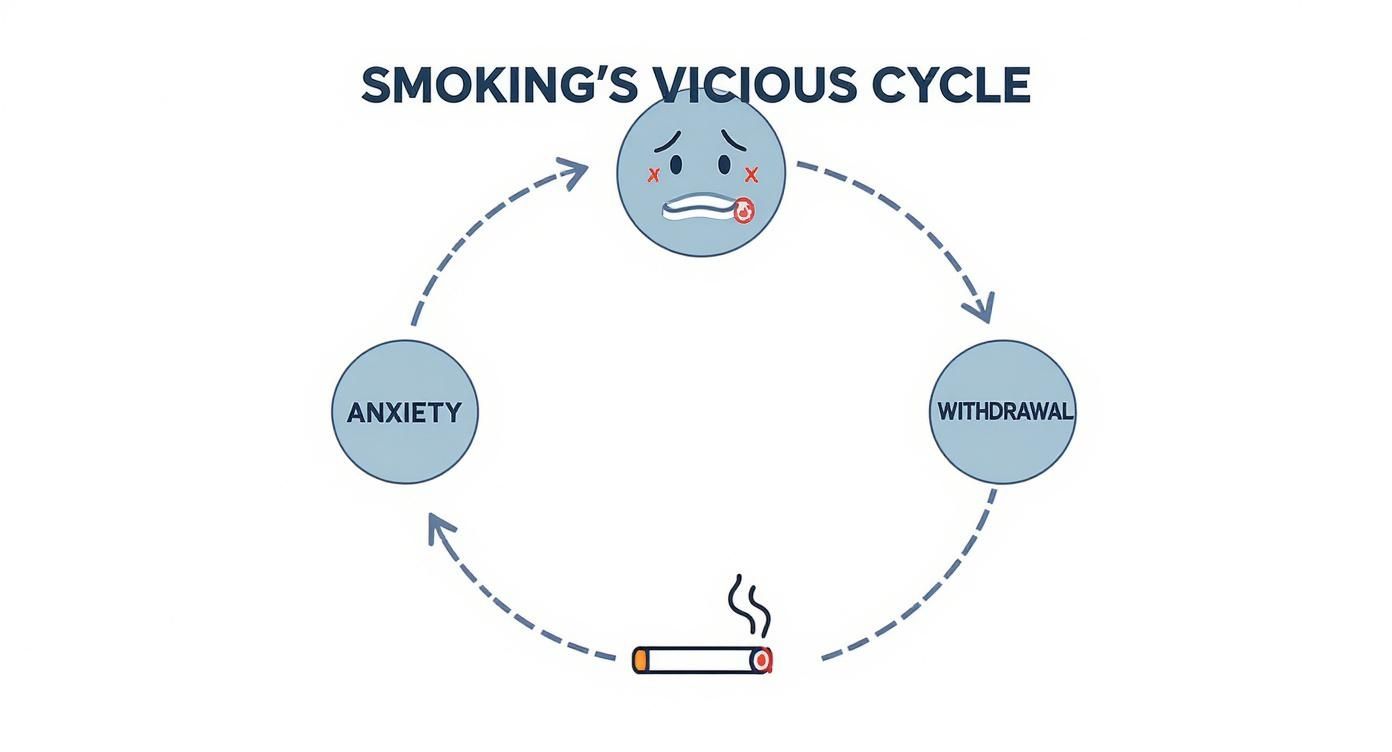
- Irritability and Anxiety: Without its usual level of dopamine, your brain's ability to manage stress is severely hampered.
- Difficulty Concentrating: Dopamine plays a huge role in focus, and the temporary shortage makes it hard to think clearly.
Knowing the "why" behind these feelings can be a game-changer. It reframes the struggle from a personal failure into a biological healing process. You aren't developing clinical depression; you're experiencing the temporary symptoms of a brain working hard to reclaim its natural balance.
Feeling a bit down after you quit smoking? That's completely normal, but it's important to understand it's not the same thing as clinical depression. Nicotine withdrawal can absolutely mess with your mood for a little while, but it's a temporary storm that passes.
Clinical depression is a much deeper, more persistent condition that needs a different kind of support. Knowing the difference helps you see the mood swings for what they are—a sign your body is healing.
Let's look at what's happening in your brain. Nicotine creates an artificial spike in dopamine, your brain's "feel-good" chemical. When you quit, that artificial supply gets cut off, and your brain is left with a temporary deficit.
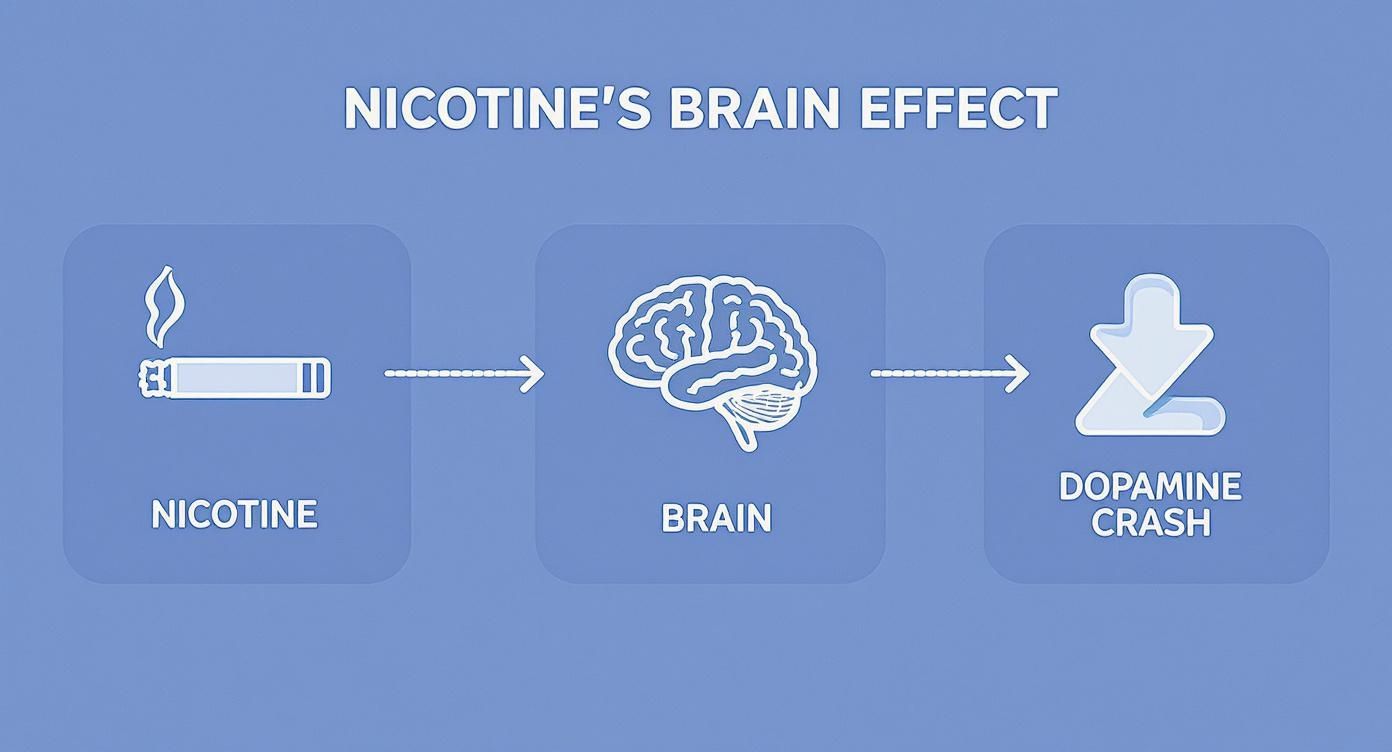
That sudden drop is the real culprit behind the intense, but temporary, low feelings you might experience. It’s a chemical rebalancing act, and it takes a little time.
Nicotine Withdrawal vs. Clinical Depression
Telling the difference between the emotional rollercoaster of nicotine withdrawal and the heavy fog of clinical depression is crucial. The question "does giving up smoking cause depression" often stems from mixing up these two very different experiences.
Think of it this way: withdrawal is like a short, bumpy flight through turbulence. It's intense and uncomfortable, but you know you'll land soon.
Clinical depression, however, is more like being lost at sea. It's a profound, lasting condition that drains the color from your world.
Defining the Timelines
The clearest giveaway is the timeline. Nicotine withdrawal symptoms, including a crummy mood and a short fuse, hit you hard and fast. They usually peak within the first week and then start to fade over the next few weeks.
Clinical depression doesn't work on such a tight schedule. For a diagnosis, a doctor is typically looking for symptoms that stick around for at least two consecutive weeks with no real sign of improvement.
The feelings might seem similar, but withdrawal is your body's temporary protest to a missing substance. Clinical depression is a sustained state that cuts much deeper, affecting your sense of self and your hope for the future.
When you grasp this, it's incredibly empowering. You can label those tough moments for what they are—a normal, expected part of the journey.
Key Symptom Differences
To help you tell these two apart, we've put together a quick comparison table. It breaks down the common symptoms and how long they typically last.
Nicotine Withdrawal vs. Clinical Depression: A Symptom Comparison
| Symptom | Nicotine Withdrawal | Clinical Depression |
|---|---|---|
| Core Feeling | Intense irritability, restlessness, and strong cravings for a cigarette. | A deep, pervasive sense of hopelessness, emptiness, or worthlessness. |
| Primary Driver | The body's physical and psychological reaction to the absence of nicotine. | A complex interplay of neurochemical, genetic, and environmental factors. |
| Duration | Peaks in the first week, then gradually subsides over 2-4 weeks. | Persists for at least two consecutive weeks and can last for months or years. |
| Impact on Joy | A temporary inability to feel pleasure, often tied to cravings. | A profound loss of interest or pleasure in all or most activities (anhedonia). |
| Other Signs | Difficulty concentrating, anxiety, increased appetite, and sleep disturbances. | Significant changes in sleep or appetite, fatigue, and feelings of guilt. |
While both can bring on a low mood, the flavor of that sadness is different. Withdrawal often feels like a constant frustration directly linked to wanting a cigarette. The symptoms of depression, on the other hand, are broader and tend to blanket every aspect of your life.
This is exactly why having a history of depression can make quitting harder. Data shows that among adults aged 20-39, only 17% with depression managed to quit successfully, compared to 36% without depression. You can explore the full research about these quitting disparities from the CDC.
The Surprising Truth About Quitting and Mood
TLDR: Worried quitting will make you depressed? The opposite is actually true. Research shows that people who quit smoking experience significant decreases in both anxiety and depression over the long term. The rough patch you feel initially is just temporary withdrawal, not a new mental health issue.
It’s one of the biggest fears people have when they think about quitting: will it send me into a depression? It's a valid concern, but the reality is actually the complete opposite for most people. Kicking the habit is one of the best moves you can make for your mental health.
What you feel in those first tough days and weeks isn't true depression. It's your brain and body healing.
Think of it this way: when you have a deep cut, the healing process can be itchy and uncomfortable. But that discomfort isn't a new injury—it's a sign that your body is repairing itself. The moodiness of nicotine withdrawal is the same thing.
The Long-Term Mental Health Boost
Once you push through that initial phase, the long-term benefits for your mind are incredible. Sticking with your quit allows your brain to get back to functioning naturally. The result is a more stable, genuinely positive mood.
This isn't just wishful thinking; it's backed by solid science. A major 2023 cohort study showed that smokers who successfully quit saw their depression and anxiety scores drop in a big way. You can discover more insights about these mental health improvements from JAMA Network Open.
The takeaway is clear: quitting smoking is linked to improved mental well-being, not the onset of depression. The benefit is so powerful that it's even more pronounced for individuals with a history of mental health challenges.
Why Your Mood Improves After Quitting
So, what’s happening under the hood? Once your brain adapts to a nicotine-free life, your natural reward system gets back in the driver's seat. Your dopamine levels begin to regulate on their own, leading to more authentic feelings of satisfaction. This is a crucial part of the smoking effects on mental health that many people don't realize.
You’re also breaking free from the constant stress of addiction. Here are a few key reasons your mood gets a major lift:
- Chemical Stability: Your brain is no longer riding the nicotine-driven dopamine rollercoaster, which means your moods become far more consistent.
- Reduced Anxiety: You're liberated from that nagging anxiety of always needing to know when and where you can have your next cigarette.
- Increased Self-Esteem: Successfully quitting is a massive achievement, providing a powerful and lasting confidence boost.
In the end, any temporary dip in your mood is a small price to pay for the significant, long-term mental health rewards.
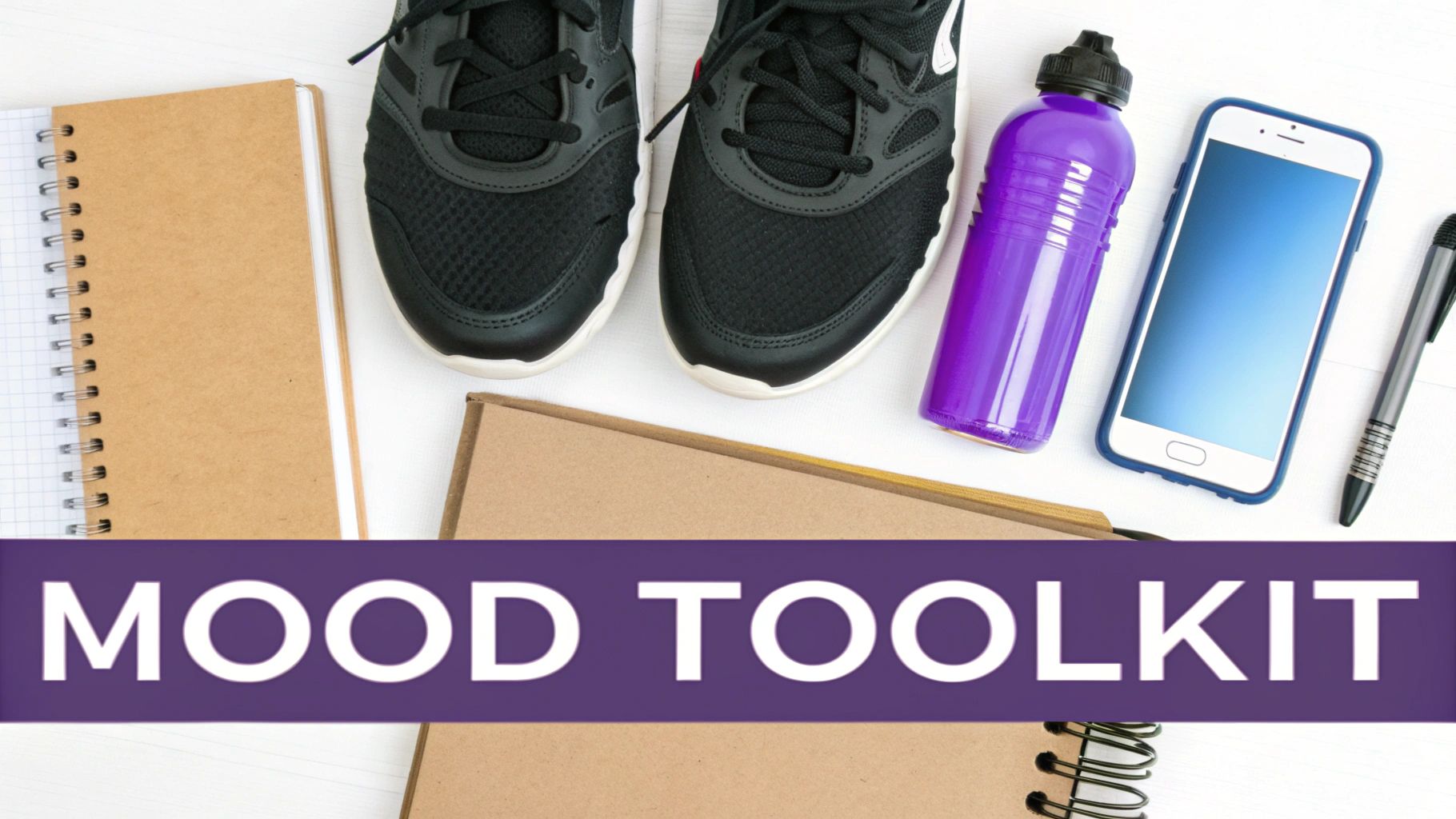
It’s one thing to understand why you feel so down when you quit smoking, but it’s another to know what to do about it. When you're in the thick of it, knowledge alone isn't enough. You need a game plan.
Simple, actionable strategies are your best friend here. Things like a brisk walk, a few minutes of mindfulness, and leaning on your support network can make a world of difference. Tools like Nicotine Replacement Therapy (NRT) are also clutch for taking the edge off withdrawal.
Practical Strategies to Manage Your Mood
Knowing the science is great, but having a practical toolkit is what will pull you through those tough moments. As your brain chemistry tries to find its footing without nicotine, feeling irritable and low is par for the course. These tactics are designed to help you ride out that emotional rollercoaster.
Think of these strategies less as a magic cure and more as ways to build up your own resilience. Every little action adds another layer of support.
Move Your Body to Change Your Mind
One of the quickest ways to fight the withdrawal blues is to get moving. You don't have to start training for a marathon. Seriously, even a quick, 15-minute walk can trigger the release of endorphins, your body's built-in mood boosters.
This isn't just about distracting yourself, either. Exercise actively stimulates the release of the same feel-good chemicals, like dopamine, that your brain is craving. It's a healthy, natural way to give your mood a lift.
Think of exercise as your secret weapon against withdrawal. It actively counteracts the dopamine deficit that causes low mood, giving you an immediate sense of accomplishment and control when you need it most.
Embrace Mindfulness and Distraction
When a craving rears its ugly head, our gut reaction is to wrestle with it, but that often just makes it stronger. A much smarter approach is to practice mindfulness. Just notice the craving without judging it, see it for what it is, and let it pass.
Distraction is another fantastic technique, as most cravings only last a few minutes. Try these simple but effective tricks:
- Wake Up Your Senses: Crunch on some carrots, blast your favorite song, or splash some cold water on your face.
- Keep Your Hands Busy: Grab a stress ball, try a puzzle, or start tackling that pile of laundry you've been avoiding.
- Change Your Scenery: Just stepping outside for a breath of fresh air or moving to another room can break the mental loop.
Build Your Support System
You don’t have to do this alone; in fact, you shouldn't. Leaning on your support system is one of the most important parts of successfully quitting. This could mean talking to friends, joining an online forum, or getting help from a professional.
For many people, Nicotine Replacement Therapy (NRT) becomes a key part of that support system. Products like patches and gum provide a steady dose of nicotine without the toxic chemicals in cigarettes. This eases physical withdrawal, freeing you up to focus on breaking habits. You can learn more about the different nicotine patches strengths and how to choose the right one for you.
A solid plan combines your personal strategies with these proven tools. By moving your body, managing your thoughts, and building a strong support network, you're setting yourself up for success.
TLDR: Mood swings are a totally normal part of quitting. But if you feel a constant sense of sadness or hopelessness that drags on for more than two weeks, it's a sign you need some backup. Losing interest in everything you once enjoyed or having thoughts of self-harm are serious signals to get help right away. Reaching out to a doctor or therapist is a sign of strength, not a sign you've failed.
Knowing When to Seek Professional Support
The emotional rollercoaster of quitting is real, but it's crucial to recognize when low points cross the line into something more serious. Think of it like a passing rainstorm versus a flood. The irritability of withdrawal is like a heavy downpour—intense, but it eventually passes.
But what if that storm doesn't let up? If feelings of sadness and hopelessness last for more than two weeks, it's a critical sign that it's time to get professional support. At this point, it's no longer just about the nicotine leaving your system.
Red Flags to Watch For
Telling the difference between a few bad days and a persistent problem is everything. You have to be honest with yourself and keep an eye out for these specific signs:
- A Complete Loss of Interest: Nothing brings you joy anymore—not the hobbies, activities, or people you used to love.
- Persistent Hopelessness: You're stuck with a deep, unshakable feeling that things will never get any better.
- Thoughts of Self-Harm: This is an immediate and urgent red flag. If this happens, you need to get professional help without a moment's delay.
Seeking support isn't a sign of failure; it’s a sign of strength and self-awareness. It shows you're committed not just to quitting smoking, but to protecting your mental health—and that's a huge step in the right direction.
How Professionals Can Help
Talking to your doctor, a therapist, or a quitline can give you a plan built just for you. This is especially important if you already have a mental health condition. Professionals are trained to create a strategy that's both safe and effective for your specific needs.
Research shows that healthcare providers are an incredible resource. One large international survey found that smokers with depression were more likely to get quitting advice from their doctors. You can read more about how healthcare interactions differ for smokers with depression.
At the end of the day, your goal is to quit for good. By understanding the best smoking cessation methods for your situation, you can build a support system that tackles both the physical addiction and the emotional hurdles.
Your Quitting Questions, Answered
Got questions about what to expect when you quit? Wondering how long the tough part lasts or how to handle it if you’ve dealt with depression before? Let's clear things up.
The worst part is usually over within the first week, with things getting much better over the next few weeks. If you have a history of depression, looping in your doctor is the best first step. NRT can also make a huge difference by taking the edge off withdrawal.
How Long Does Withdrawal Actually Last?
When you're in the thick of it, the emotional ups and downs of quitting can feel like they'll never end. But there's a light at the end of the tunnel.
For most people, the most challenging physical and emotional symptoms peak within the first 3 to 7 days.
After that first week, you'll likely start to feel a real shift. Your body and brain are starting to find their footing again. The symptoms will begin to fade over the next few weeks.
What if I’ve Struggled with Depression Before?
If you already have a history of depression, you'll want to be a bit more strategic about quitting. The mood dips from withdrawal can feel more severe or uncomfortably familiar.
The trick is to get ahead of it. Have a conversation with your doctor or a therapist before you pick a quit date. They'll work with you to build a solid plan designed to protect your mental health.
Having a history of depression doesn't make quitting impossible. It just means that having a strong support system—from professionals to friends and family—is an even more vital piece of your smoke-free journey.
How Can NRT Help My Mood?
This is where Nicotine Replacement Therapy (NRT) can be a real game-changer. Products like the patch, gum, or lozenges give your body a steady, clean dose of nicotine. This helps ease the physical withdrawal symptoms that are so disruptive.
Think of it like this: NRT helps cushion that sudden dopamine crash that’s responsible for so much of the low mood. When the physical side is less chaotic, you can free up your mental energy to focus on breaking psychological habits.
By giving your brain chemistry a more stable foundation, NRT provides a much better chance of navigating the emotional rollercoaster of quitting. It's the bridge that helps your brain gently adjust to a new normal without cigarettes.
At Nic Facts, our mission is to provide clear, evidence-based information to help you understand nicotine and make informed decisions. For more unbiased insights, visit us at https://nicfacts.org.