TLDR: The Quick Hits on Smokeless Tobacco
- It's Not Safe: Think of it as trading lung cancer for aggressive mouth cancer. Smokeless tobacco is packed with at least 28 cancer-causing chemicals.
- Super Addictive: A single "dip" can deliver 3-4 times more nicotine than a cigarette. This makes it incredibly hard to quit.
- It's a Chemical Cocktail: Beyond nicotine, it contains things like polonium-210 (a radioactive element), lead, and arsenic.
- Serious Health Risks: Major links to cancers of the mouth, throat, and pancreas, plus severe gum disease, tooth loss, and heart problems.
- Myths Busted: It is NOT a safe way to quit smoking. It just swaps one addiction for another, often more intense, one.
Let's be clear from the start: smokeless tobacco is not a safe alternative to cigarettes. It’s a highly addictive product that comes in many forms. It's packed with harmful chemicals linked directly to cancer and a host of other serious health problems.
There's a common and dangerous myth that if there’s no smoke, there’s no harm. This couldn't be further from the truth. While you aren't inhaling smoke, you are absorbing potent doses of nicotine and dozens of cancer-causing agents straight into your bloodstream through the lining of your mouth.
So, what exactly is smokeless tobacco? Think of it as a broad category covering any tobacco product that you don't have to light on fire. These products deliver nicotine in different ways, but the end result is the same: addiction and exposure to dangerous toxins.
Your Quick Guide to Product Types
The main differences between smokeless products really come down to how the tobacco is processed and how you use it. Some are chewed, some are "dipped," and others simply dissolve.
To give you a clearer picture, here’s a quick rundown of the most common types you’ll see.
A Quick Look at Common Smokeless Tobacco Products
This table breaks down the basics of each product type, from its form to how it's typically used.
| Product Type | Common Form | Method of Use |
|---|---|---|
| Chewing Tobacco | Loose leaves, plugs, or twists of dried tobacco | Placed between the cheek and gum; user chews or holds it in place. |
| Snuff (Dip) | Finely ground, moist tobacco sold in cans | A "pinch" is placed between the lower lip or cheek and the gum. |
| Snus | Moist powder, often sold in small teabag-like pouches | Placed between the upper lip and gum; doesn't require spitting. |
| Dissolvables | Tobacco shaped into lozenges, strips, or sticks | Placed in the mouth where they dissolve completely. |
As you can see, while the delivery method changes, the core concept remains the same. The goal is direct absorption of tobacco's chemical payload through the tissues in your mouth.
What’s Actually Inside Smokeless Tobacco?
It’s easy to think of smokeless tobacco as just dried leaves, a more "natural" alternative to cigarettes. But that's a dangerous oversimplification. In reality, it's a chemical cocktail engineered to deliver an intense hit of nicotine.
This stuff isn't just tobacco. It contains at least 28 different chemicals known to cause cancer, called carcinogens. The most infamous of these are tobacco-specific nitrosamines (TSNAs), which form when the tobacco is cured and can directly damage your DNA.
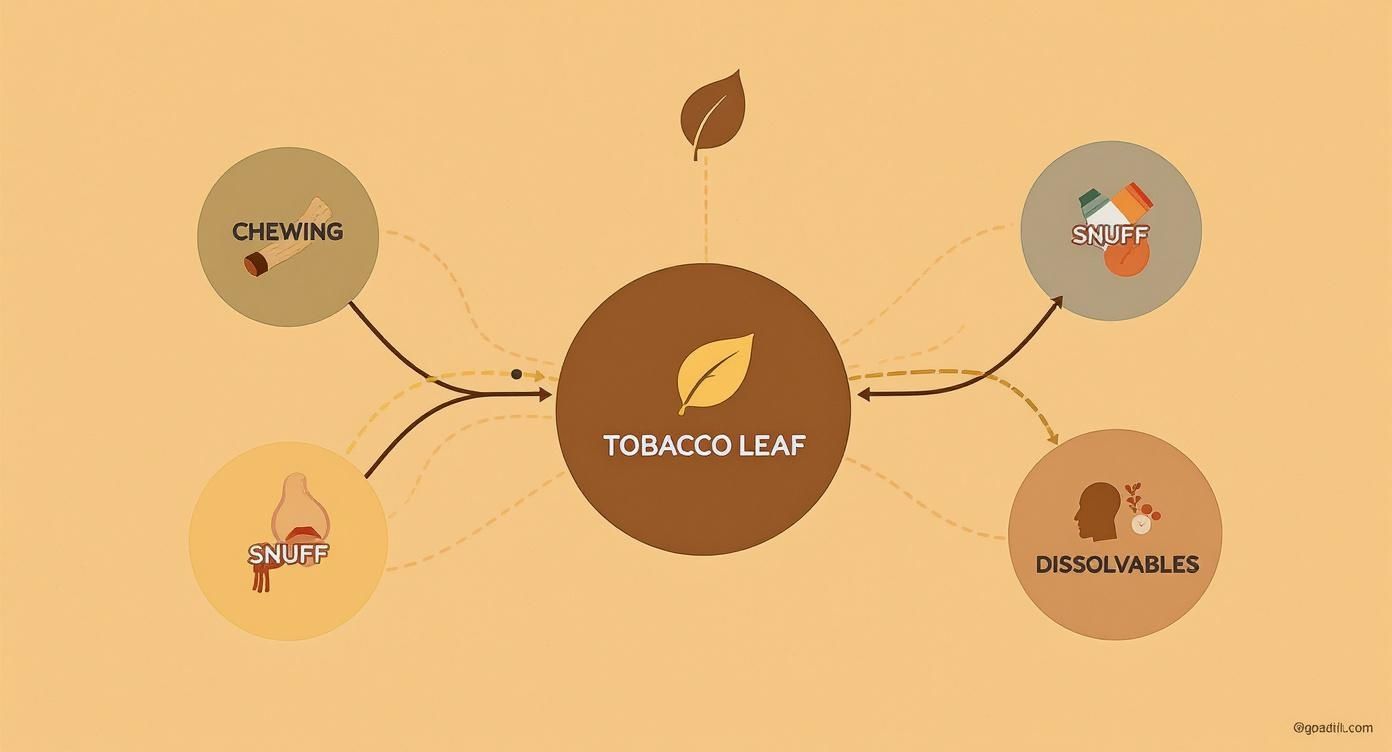
As the infographic shows, it doesn't matter if it's chewing tobacco, snuff, or dissolvable products. They all come from the same plant and carry the same fundamental dangers.
Nicotine: The Addictive Master Key
Let's be clear: nicotine is the engine driving smokeless tobacco use. It's a highly addictive drug that essentially hijacks your brain's reward system. When you use it, nicotine floods your brain with dopamine, creating a temporary feeling of pleasure and calm.
This is what creates the powerful cycle of craving and use that’s so tough to escape. A single pinch or "dip" of smokeless tobacco can deliver three to four times more nicotine than a single cigarette. Since it’s absorbed directly through the lining of your mouth, the effect is potent and lasts longer, which only reinforces the addiction.
The real problem is how quickly your brain adapts. It starts to see this artificial pleasure spike as normal and necessary. When nicotine levels dip, your brain panics, triggering withdrawal symptoms like anxiety and irritability, pushing you to reach for more.
Carcinogens: The Cellular Vandals
Beyond the addiction, the scariest part is the cancer risk. The main culprits are those tobacco-specific nitrosamines (TSNAs) I mentioned earlier. They're created when tobacco leaves are cured and processed.
Think of TSNAs as tiny vandals inside your body. Once they get into your system, they can corrupt the DNA inside your cells—your body's fundamental blueprint.
This DNA damage is exactly how cancer starts. With repeated exposure, these cellular errors can accumulate, causing cells to multiply out of control and form tumors. The areas at most immediate risk are those in direct contact with the tobacco juices:
- Mouth and Throat: These tissues are constantly exposed, making them ground zero for cancer development.
- Esophagus: Swallowing the juice, intentionally or not, brings these carcinogens into direct contact with the esophagus.
- Pancreas: The chemicals enter your bloodstream and can travel to distant organs, like the pancreas, causing damage there.
And TSNAs aren't the only problem. Smokeless tobacco also contains other toxic substances like polonium-210 (a radioactive element), lead, and arsenic. It's this combination of toxins that poses such a serious, cumulative threat to your health.
How Smokeless Tobacco Impacts Your Health
The short version: It bathes your mouth in cancer-causing chemicals. This sets the stage for aggressive oral cancers, severe gum disease, and rampant tooth decay. And the damage doesn't stop there.
The high dose of nicotine puts your entire cardiovascular system under immense strain. This raises the risk of high blood pressure, heart attack, and stroke.
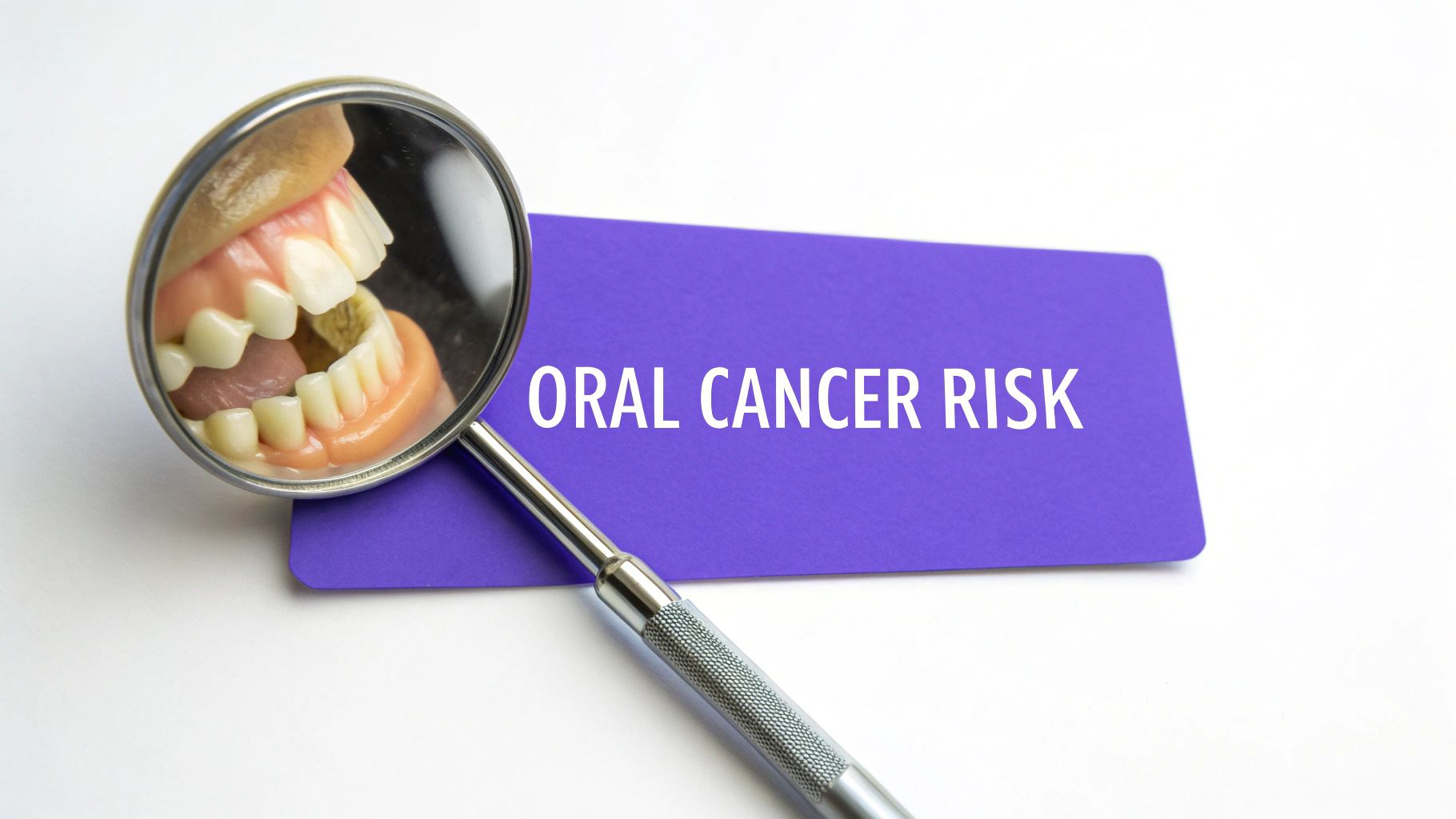
From the moment smokeless tobacco enters your mouth, it kicks off a cascade of health problems. The damage isn't some far-off risk; it starts right away. Because the product sits directly against the sensitive tissues of your mouth for long periods, it turns your mouth into ground zero for serious disease.
Imagine what this does to your gums. It's like a constant, low-grade chemical burn that never gets a chance to heal. This chronic irritation causes the gums to pull away from the teeth—a process called gum recession.
This exposes the sensitive tooth roots and creates deep pockets where harmful bacteria can flourish. The sugars often added to these products act as a food source for bacteria. This creates the perfect storm for severe tooth decay.
The Clear Link to Oral Cancer
By far, the most dangerous health consequence is the drastically increased risk of oral cancer. Smokeless tobacco is packed with dozens of carcinogens, like TSNAs, which directly damage the DNA in the cells of your mouth, lips, and throat. With repeated exposure, this damage can cause cells to multiply out of control, leading to cancerous tumors.
It's a sobering fact: long-term users of smokeless tobacco are up to 50 times more likely to develop cancers of the cheek, gums, and the inner lining of the lips. These are often aggressive, disfiguring cancers that require extensive surgery to treat.
And the danger isn't limited to one area. Cancer can pop up anywhere the tobacco juice touches—your tongue, the roof of your mouth, or even down your throat.
Damage Beyond the Mouth
While the damage inside your mouth is the most obvious, the impact of smokeless tobacco ripples throughout your entire body. Once nicotine and other harmful chemicals are absorbed into your bloodstream, your cardiovascular system takes a significant hit.
Nicotine acts like a constant stress test for your heart. It instantly jacks up your heart rate and blood pressure, forcing your heart to work much harder than it should. Over time, this relentless strain can lead to serious and life-threatening heart problems:
- Increased Risk of Heart Attack: Nicotine contributes to the hardening and narrowing of arteries, a condition known as atherosclerosis.
- Elevated Blood Pressure: Chronic use often leads to persistently high blood pressure, which is a major risk factor for both heart disease and stroke.
- Higher Stroke Risk: The one-two punch of high blood pressure and damaged blood vessels makes a stroke far more likely.
Tobacco use, in all its forms, remains one of the world's leading causes of preventable death. It kills over 7 million people every year. Smokeless tobacco is a significant contributor to this global toll.
You can dig into the latest findings on tobacco's global impact from the World Health Organization. To learn more about the broader connection between nicotine and well-being, check out our guide on the effects of smoking on mental health.
A Global Snapshot of Smokeless Tobacco Use
TLDR: Smokeless tobacco is a global issue affecting over 360 million people. The overwhelming majority—more than 90%—live in low- and middle-income countries, especially South Asia. This isn't just a product; it's a practice deeply woven into cultural traditions, creating a complex public health challenge.
When people in the West think of smokeless tobacco, they might picture dipping tobacco or chew. But that's a tiny part of a much bigger, global story. For millions, these products aren't just an alternative to cigarettes—they're an integral part of the cultural fabric.
To really understand the facts, we need to zoom out and look at the worldwide patterns. The global map of smokeless tobacco use isn't uniform. It’s marked by intense hotspots where consumption is a normal, everyday activity.
The Global Hotspots for Use
The epicenter of smokeless tobacco use is, without a doubt, South and Southeast Asia. In countries like India, Bangladesh, and Pakistan, it has been part of life for centuries. Products like gutka—a mixture of crushed betel nut and tobacco—are as common as a morning cup of coffee is in other parts of the world.
Globally, the numbers are staggering: more than 360 million people use smokeless tobacco. Over 90% of them live in low- and middle-income countries. This underscores the immense public health burden these nations face.
Chewing tobacco is so popular that it's projected to capture nearly 72% of the smokeless market share by 2025. This is driven by its low cost, convenience, and deep cultural roots. If you're interested, you can explore the full smokeless tobacco market report.
It's impossible to overstate the cultural significance here. In many communities, offering a guest some form of smokeless tobacco is a gesture of hospitality, much like offering tea. It’s shared at social events and serves as a daily ritual for millions of workers.
This deep integration into daily life makes public health initiatives incredibly difficult. You’re not just warning someone about a health risk. You’re asking them to abandon a practice tied to their community's identity and traditions.
Who Is Most Likely to Use It?
While the demographics shift from one region to another, some clear trends emerge. Looking at who uses these products helps us understand who is most vulnerable and why.
Several factors paint a picture of the typical user:
- Gender: In South Asia, men are by far the predominant users. However, in certain communities, specific products are traditionally used by women as well.
- Socioeconomic Status: Use is often concentrated among people with lower incomes and less formal education, given how cheap and accessible many products are.
- Age: People often start young, frequently during adolescence, due to peer pressure and cultural norms.
- Occupation: It is especially common among manual laborers and long-haul drivers, who use it to fight off fatigue during long workdays.
Understanding these patterns is key. It reveals that smokeless tobacco use isn't just a random personal choice. It’s a habit deeply connected to the social, cultural, and economic currents that shape people's lives.
Busting Common Myths About Smokeless Tobacco
Let's get straight to the point: No, smokeless tobacco is not a safe alternative to cigarettes. It's also a terrible way to try and quit smoking. Using these products simply means you're trading lung damage for a high risk of aggressive oral cancers and a severe nicotine addiction.
Misinformation about smokeless tobacco is everywhere, making it seem much less harmful than it really is. These myths can trick people into starting or make it harder for them to quit. It's time to set the record straight with some hard facts.
Myth 1: It’s a Safe Way to Quit Smoking
The Fact: This is probably the most dangerous myth out there. Instead of lung cancer, you're bathing your mouth, throat, and esophagus in a soup of potent, cancer-causing chemicals. You're just swapping one group of serious health risks for another.
What’s more, many smokeless products deliver a much bigger nicotine punch than cigarettes. This can deepen your addiction, making it even tougher to break free. Thinking of it as a step down from smoking is like trying to put out a fire with gasoline.
If you're serious about quitting, your best bet is to look into the best smoking cessation methods that have a proven track record of success.
The bottom line is simple: you're still feeding a powerful addiction. That isn't quitting; it's just changing the delivery system for the same drug.
Myth 2: "Natural" or "Herbal" Tobacco Is Harmless
The Fact: Seeing words like "natural" or "herbal" on a package is pure marketing, not a sign of safety. All tobacco, no matter how it's grown, contains nicotine and cancer-causing chemicals called tobacco-specific nitrosamines (TSNAs). These poisons are part of the tobacco plant itself.
In some cases, products marketed as "organic" have been found to contain even higher levels of these harmful chemicals. The danger is baked into the tobacco leaf, not the things added to it. Don't let clever marketing fool you.
Myth 3: It Only Affects Your Mouth
The Fact: While the damage inside your mouth is the most visible, the harm doesn't stop there. The toxins, especially nicotine, are absorbed directly into your bloodstream. They wreak havoc on your entire body, particularly your cardiovascular system.
This constant exposure to potent chemicals leads to a whole host of systemic problems.
- Increased Heart Rate: Nicotine acts as a stimulant, putting a continuous strain on your heart and making it work harder than it should.
- High Blood Pressure: Over time, this constant stress can lead to chronic hypertension.
- Increased Risk of Heart Attack and Stroke: The chemicals also contribute to the hardening and narrowing of your arteries (atherosclerosis).
The damage is anything but localized. Once those toxins hit your bloodstream, they travel everywhere, posing a major threat to your overall health.
The Marketing Machine Behind Smokeless Tobacco
The smokeless tobacco industry is a multi-billion dollar business for a reason. It's powered by sophisticated marketing designed to draw in new users—especially young people. The industry uses enticing flavors and links its products to powerful ideas of masculinity, independence, and sports.

Behind the continued popularity of smokeless tobacco is a relentless and calculated marketing effort. Companies pour billions into crafting a specific image for their products. These strategies are about weaving these products into the fabric of certain lifestyles and cultural identities.
Fundamentally, this marketing playbook has two main objectives. The first is to recruit new, often young, users. The second is to normalize the use of these products, making them seem like a perfectly acceptable part of everyday life.
The Power of Flavor and Image
One of the industry's most successful tactics is the use of appealing flavors. Mint, wintergreen, cherry, and other fruit flavors act as a smokescreen. They mask the raw, bitter taste of tobacco itself.
This simple trick makes it far easier for a first-time user to try the product. When you make a product taste more like candy, you can get new users hooked before they grasp the long-term dangers.
Beyond flavor, the marketing leans heavily on identity. Advertisements are often filled with rugged, masculine archetypes—think cowboys, pro athletes, and soldiers. This creates a direct line between the product and ideals like strength, freedom, and patriotism.
This type of branding is incredibly powerful. It's not just selling a product; it's selling an identity. The underlying message is simple: using this product signals that you're part of a tough, independent tribe.
This imagery forges a strong psychological bond with users. For many, the act of using smokeless tobacco becomes a ritual. It's a way to signal that they belong and to reinforce the image they have of themselves.
Following the Money Globally
The financial payoff from these strategies is staggering. The global market for smokeless tobacco isn't just holding steady; it's growing. A lot of this growth is driven by the mistaken belief that smokeless products are a safer alternative to cigarettes.
Just look at the numbers. In 2023, the smokeless tobacco market was valued at around USD 19.3 billion. Projections show it climbing to nearly USD 27.6 billion by 2032.
This expansion shows how successful the industry has been at positioning its products. You can dive deeper into smokeless tobacco market growth trends to see the full financial picture. This economic momentum keeps the marketing machine running at full speed.
Common Questions About Smokeless Tobacco
Let's cut right to the chase: No, smokeless tobacco isn't a safe alternative to smoking. It's just swapping one set of serious health risks for another. And yes, it's intensely addictive—sometimes even more so than cigarettes.
People often have a lot of questions about smokeless tobacco, especially when trying to understand the real risks. Let's clear up some of the most common myths and concerns with straight facts.
The biggest question is whether "dipping" is safer than lighting up. While you avoid inhaling smoke, you’re exposing yourself to a whole different lineup of dangers. Smokeless tobacco is a major cause of aggressive cancers in the mouth, throat, esophagus, and pancreas.
Is It Really Addictive?
Without a doubt. Smokeless tobacco is loaded with nicotine. A single dip or chew can deliver three to four times more nicotine than one cigarette. This intense dose makes the addiction incredibly powerful and often harder to break than a cigarette habit.
This isn't just a "bad habit"—it's a physiological dependency. The nicotine floods your brain, hijacking its reward pathways and creating a relentless cycle of cravings. If you're curious, you can learn more about the various methods for tobacco use testing.
The reason quitting is so tough is that nicotine withdrawal is very real. When you try to stop, you're not just fighting a craving. You're dealing with physical and mental symptoms like irritability, anxiety, and trouble concentrating.
Are There Effective Ways to Quit?
Yes, and many people have successfully quit for good. But it rarely happens without a solid plan. Going "cold turkey" is notoriously difficult because of the intense withdrawal that high-nicotine products create.
The most successful quitting strategies usually combine a few different tactics:
- Behavioral Support: Getting help from a counselor or joining a support group gives you real-world tools to handle triggers and ride out cravings without giving in.
- Nicotine Replacement Therapy (NRT): Using things like nicotine gum, patches, or lozenges can be a game-changer. They give your body the nicotine it craves without the cancer-causing chemicals, letting you step down your dependence gradually.
Your best first step is to talk to a doctor or call a quit-line. A healthcare professional can help you build a personalized plan that dramatically boosts your odds of success.
At Nic Facts, our mission is to provide clear, objective, and evidence-based information on nicotine. We are a non-profit educational project dedicated to ensuring you have access to the facts. To learn more, visit https://nicfacts.org.