
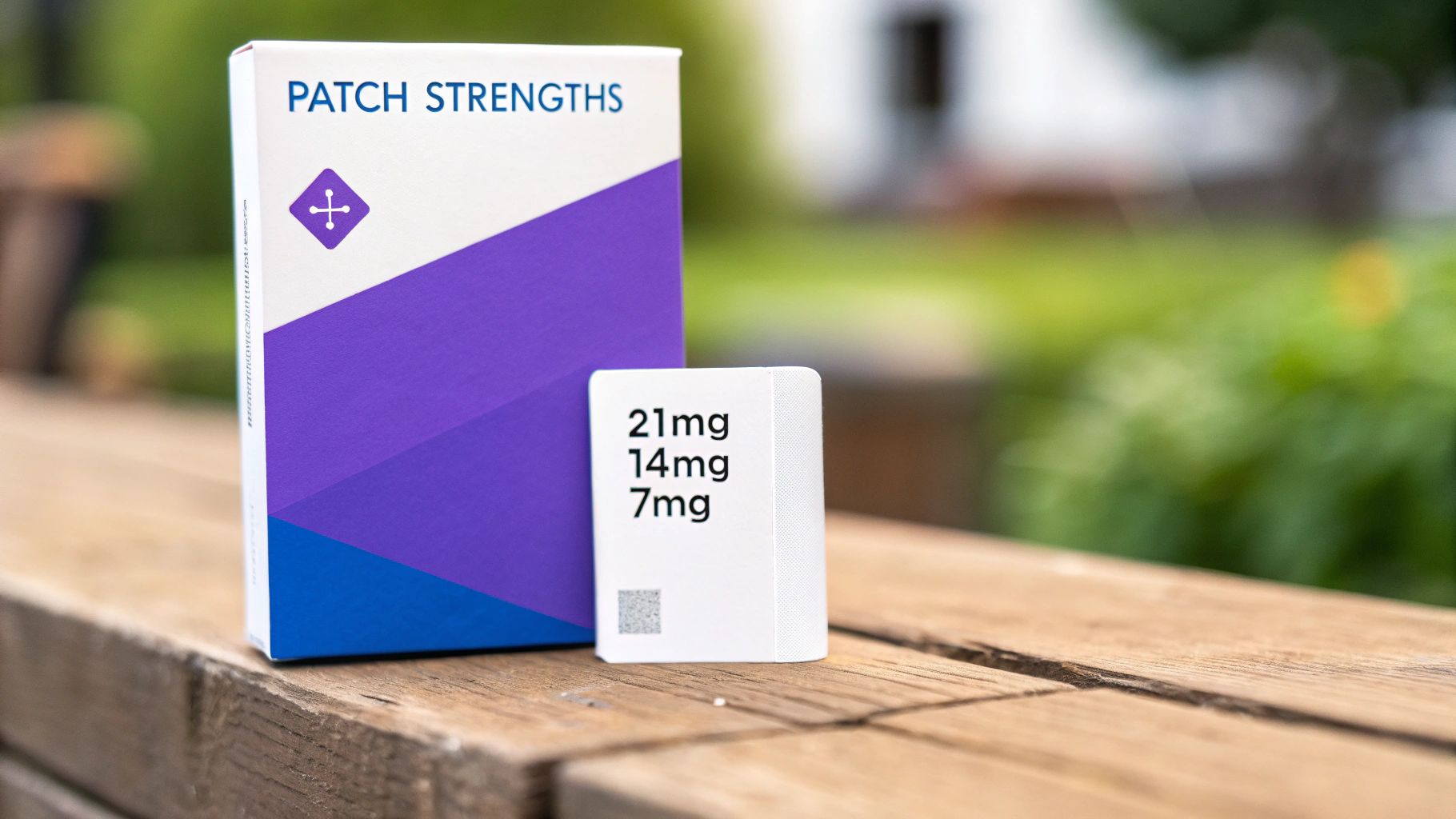
TL;DR: Think of nicotine patch strengths like a volume knob for your cravings. You start at a level that matches how much you smoke, then you slowly turn it down over time. The most common strengths are 21mg, 14mg, and 7mg, which are designed to help you step down and quit gradually.
How to Choose the Right Nicotine Patch Strength
Picking the right starting dose for a nicotine patch is a huge part of setting yourself up for success. Getting it right helps you keep those tough withdrawal symptoms at bay. The system is designed to be intuitive, matching the patch's strength to your daily smoking habits.
The idea is simple but powerful. You replace the erratic, high-dose nicotine hits from cigarettes with a slow, steady stream from the patch. This gives your body the nicotine it craves without the tar, carbon monoxide, and thousands of other chemicals.
Finding Your Starting Point
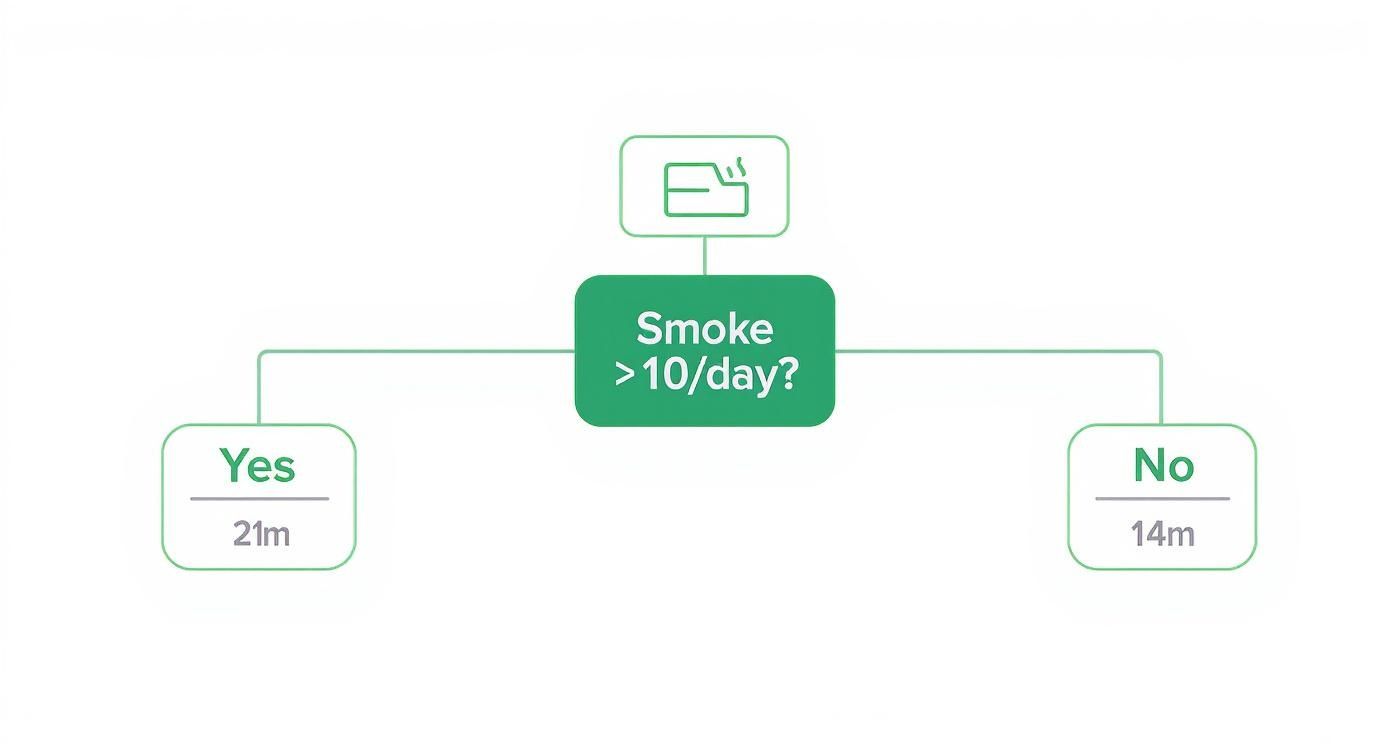
So, where do you begin? It almost always comes down to one simple question: how many cigarettes do you smoke each day? Someone with a pack-a-day habit needs a much higher starting dose than someone who only smokes a few.
Here’s how the standard recommendations usually break down:
- 21mg Patch (Step 1): This is the highest dose and the typical starting point for anyone smoking more than 10 cigarettes a day. It's designed to handle the intense cravings that come with a heavier smoking habit.
- 14mg Patch (Step 2): If you smoke 10 or fewer cigarettes a day, this might be your starting point. It's also the second step for heavier smokers who are tapering down from the 21mg patch.
- 7mg Patch (Step 3): This is the finish line. The lowest dose helps your body make that final adjustment to being nicotine-free, making the last leap much easier.
This tiered system is what experts call the "step-down" method. You aren't just quitting cold turkey; you're gradually weaning your body and brain off nicotine. This gentle tapering process boosts your chances of staying smoke-free for good.
Nicotine Patch Strengths at a Glance
This table helps you match your daily smoking habit to the recommended starting patch strength and see a typical timeline for the step-down process.
| Patch Strength (mg/24 hours) | Recommended For (Cigarettes per Day) | Typical Starting Step | Average Duration |
|---|---|---|---|
| 21 mg | More than 10 cigarettes | Step 1 | 4-6 weeks |
| 14 mg | 10 or fewer cigarettes | Step 1 or 2 | 2-4 weeks |
| 7 mg | Final tapering phase | Step 2 or 3 | 2-4 weeks |
Remember, these are general guidelines. Your doctor or pharmacist can help you create a personalized plan that fits your needs. This ensures you have the best possible chance of success.
How Nicotine Patches Help You Quit
Think of a nicotine patch like a slow-drip irrigation system for your body. Instead of the sudden, intense rush from a cigarette, it delivers a steady, controlled stream of nicotine. This constant supply is the key to keeping withdrawal symptoms and cravings at bay.
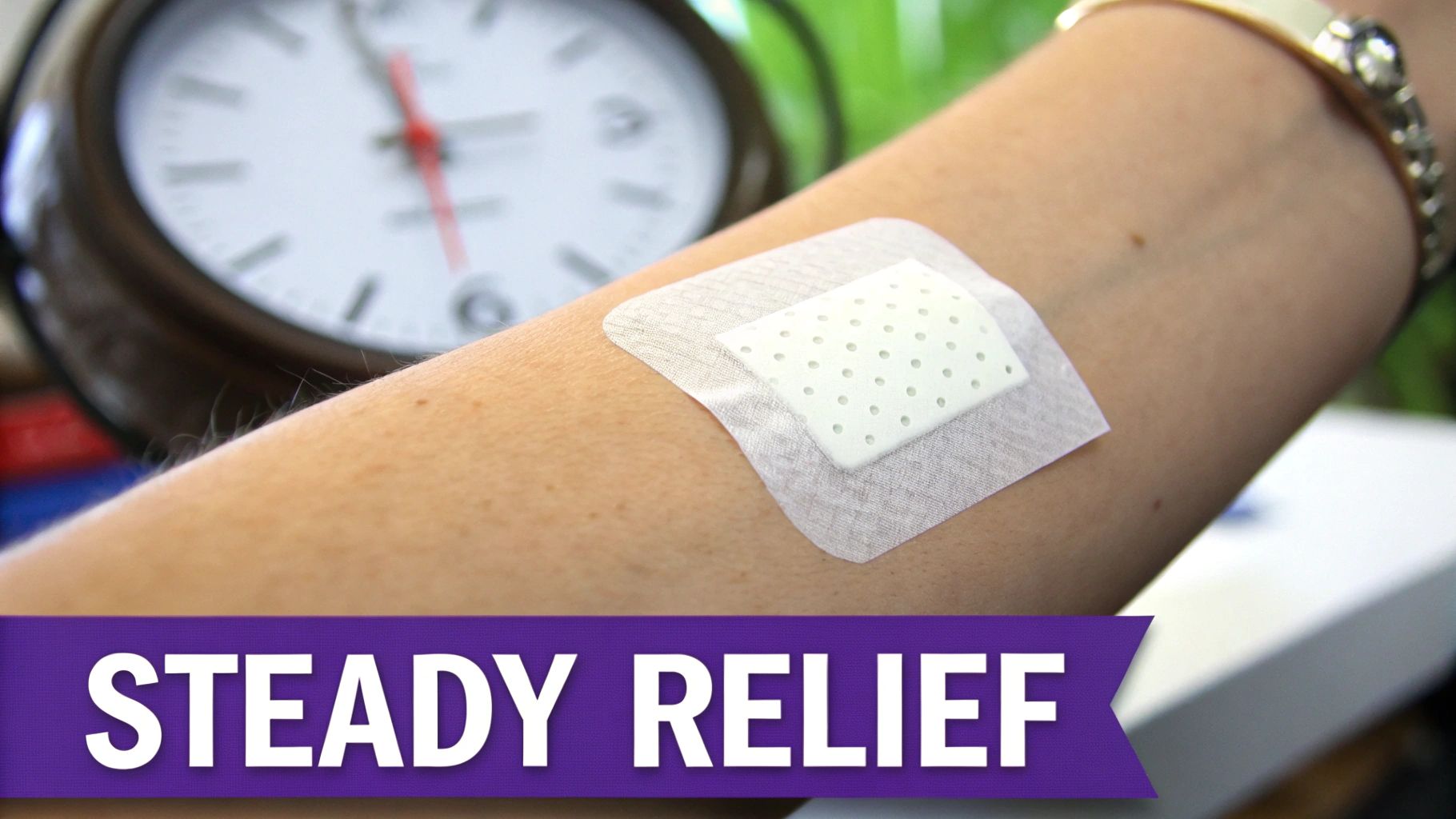
Cigarettes deliver nicotine in sharp, fast spikes, creating a powerful cycle of craving and reward. The patch is designed to completely break that cycle by smoothing out those jarring peaks and valleys. This helps stop the irritability, anxiety, and cravings that often lead people back to smoking.
The patch is a cornerstone tool in many of the best smoking cessation methods used today.
The 24-Hour Patch vs. The 16-Hour Patch
One of the first choices you'll face is whether to get a patch you wear around the clock or one you take off at night. Each type is built for different kinds of smokers and cravings.
- The 24-Hour Patch: You wear it continuously, day and night. It's fantastic for people who wake up in the morning already desperate for a cigarette. The patch keeps nicotine in your system overnight so you don't start your day in withdrawal.
- The 16-Hour Patch: You wear this one only during your waking hours, taking it off before bed. This is a solid choice if the 24-hour patch gives you vivid dreams or disrupts your sleep.
Ultimately, the choice comes down to your daily experience. If that first-thing-in-the-morning cigarette is your biggest struggle, the 24-hour patch is probably your best bet.
The science behind either patch is a process called transdermal delivery. Nicotine is absorbed through your skin directly into the bloodstream. This method bypasses your lungs, meaning you get nicotine without the toxic tar from smoke.
Standardizing Strengths for Different Needs
The whole system works because patches come in different strengths, allowing you to match the dose to your level of dependency. Over the years, manufacturers have settled on a standard set of doses. This helps guide people through a gradual step-down process.
Most brands offer 24-hour patches in 7 mg, 14 mg, and 21 mg strengths. You'll also see corresponding doses for 16-hour patches, like 10 mg, 15 mg, and 25 mg, to fit that shorter wear time. This range ensures there’s a starting point that makes sense for you.
Choosing Your Starting Patch Strength
The short version? It all comes down to your daily smoking habit. If you're a pack-a-day person, you'll almost certainly start with the highest strength, 21 mg. Smoke 10 or fewer? The medium 14 mg patch is likely your best bet.

Picking the right nicotine patch strength is the foundation of your quit plan. Get it right, and you set yourself up for success. Too low a dose, and cravings will feel overwhelming; too high, and you might feel jittery.
The goal is simple: find a starting dose that takes the edge off withdrawal without giving you too much nicotine. Luckily, this isn't a shot in the dark. The patch system is designed to meet you where you are.
How Many Cigarettes Do You Smoke a Day?
Your daily cigarette count is the biggest clue for your starting strength. This number gives a direct snapshot of your body's current nicotine dependence. It's the most reliable way to match you with the right initial dose.
The concept is straightforward: the more you smoke, the more nicotine your body is used to. This means you'll need more help managing those intense withdrawal symptoms. That’s why the standard clinical guidelines are built around a simple threshold.
As a rule of thumb, if you smoke more than 10 cigarettes a day, you're what we consider a heavy smoker in the world of nicotine replacement. For this group, starting with the highest dose—the 21 mg patch—is the clear path forward.
If you smoke 10 or fewer cigarettes daily, your body’s nicotine demand is lower. Starting on the highest dose would likely be overkill. For lighter smokers, the 14 mg patch is the recommended starting point.
The "First Cigarette of the Day" Test
Here’s another incredibly useful tell: how soon do you light up after you wake up? This simple question reveals a ton about your physical addiction. It tells us how urgently your body craves nicotine just to get the day started.
Think about which of these sounds more like you:
- You smoke within 30 minutes of opening your eyes. This is a classic sign of high nicotine dependence. After a whole night without it, your body is screaming for a fix.
- You can wait an hour or more before your first cigarette. This suggests a lower level of physical dependence. Your morning cravings are still there, but they aren't quite as loud.
If you're in that first group, you should strongly consider the 21 mg patch. That intense morning craving is a dead giveaway that your body needs a strong, steady dose. It helps keep withdrawal from derailing your quit attempt right from the get-go.
The Step-Down Method: Your Guide to Tapering Off Nicotine
When it comes to quitting smoking, going "cold turkey" can feel like jumping off a cliff. The nicotine patch offers a much gentler approach: the "step-down" method. Think of it as walking down a staircase instead of taking a leap.
This systematic process is the secret sauce to making the patch work. You gradually lower your nicotine intake over several weeks. This gives your body and mind the time they need to adjust.
Your Step-Down Plan for Quitting
Quitting with a patch isn't about cutting off nicotine all at once. It’s a carefully planned tapering process that gently weans your body off its dependence. This prevents the shock to your system that often leads to relapse.
Each time you move to a lower patch strength—say, from 21 mg down to 14 mg—you're retraining your brain. You give it a few weeks to get used to functioning with less nicotine. This methodical reduction sets you up for long-term success.
A Typical Step-Down Schedule
While your doctor might adjust your plan, most nicotine patch programs follow a standard 8 to 12-week schedule. This timeline is broken into clear, manageable steps. It provides a predictable path forward, which can be incredibly reassuring.
Here’s what a common schedule looks like for someone who smokes more than 10 cigarettes a day:
- Weeks 1-6 (Step 1): You’ll start with the 21 mg patch every day. This is the longest phase for a reason. It gives your body time to stabilize and helps you break the physical habit of smoking.
- Weeks 7-8 (Step 2): Time to step down to the 14 mg patch. During these two weeks, you're teaching your body how to cope with a significantly lower level of nicotine.
- Weeks 9-10 (Step 3): For the final stretch, you’ll use the 7 mg patch. This is the last taper, designed to gently guide you toward being completely nicotine-free.
This structured timeline is more than just a schedule; it’s a psychological roadmap. Knowing exactly what’s coming next helps build your confidence. It makes the whole process feel less daunting and much more achievable.
For lighter smokers (10 or fewer cigarettes a day), the journey is a bit shorter. They usually start at Step 2 with the 14 mg patch for six weeks. They then finish with the 7 mg patch for the last two weeks.
Managing Common Side Effects
Here's a quick rundown: most side effects are pretty mild and don't last long. Things like skin irritation or some wild dreams are common. You can usually handle them with simple tricks, like moving the patch to a new spot each day.
The vast majority of side effects are minor and easy to manage. It's just your body recalibrating to a life without cigarettes. Knowing what to expect makes it much easier to handle these little hurdles.
Dealing with Skin Irritation
The number one complaint is some redness, itching, or irritation right under the patch. This is almost always caused by the adhesive, not the nicotine. In fact, studies show that while mild skin reactions are common, they rarely lead people to give up.
Here are a few tried-and-true tricks to keep your skin happy:
- Rotate, Rotate, Rotate: This is the most important rule. Never stick a new patch on the exact same spot two days in a row. Give each patch of skin at least a full week to breathe before you use it again.
- Start with a Clean Slate: Always apply your patch to skin that's clean, dry, and free of any lotions or creams. This helps prevent irritation and makes the patch stick better.
- Try a Different Brand: The adhesive formulas can vary quite a bit between brands. If one type consistently bugs your skin, switching to another can often solve the problem.
Navigating Sleep and Dreams
Using a 24-hour patch? You might notice some changes in your sleep. It's common for people to report having incredibly vivid or bizarre dreams. This happens because the patch keeps delivering nicotine overnight, which can keep your brain more active.
While it can be a bit strange, it’s not harmful. If the "dream theater" is getting to be too much, the easiest fix is to switch to a 16-hour patch. You could also talk to your doctor about trying a lower nicotine patch strength.
It's really important to know the difference between a minor side effect and the signs of too much nicotine. A little redness is one thing. Feeling dizzy, nauseous, or having a racing heartbeat is another. Remove the patch and contact your doctor if that happens.
Why Nicotine Patches Are a Global Health Tool
When you choose to use a nicotine patch, you're not just making a personal choice. You are joining a massive global health movement. Your decision contributes to a worldwide shift toward better public health.
Think of the patch as a standard item in a first-aid kit. It's a simple, effective, and widely available way to tackle a huge public health challenge. This is why organizations and governments champion nicotine replacement therapies (NRTs) like the patch.
The Growing Market for Quitting Aids
You can see this shift happening in real-time just by looking at the economics. The global nicotine patch market was valued at around USD 1.2 billion in 2023. It is expected to nearly double, hitting roughly USD 2.3 billion by 2032.
This isn't just about business; it’s a reflection of a deeper cultural change. The growth is fueled by government initiatives to cut smoking rates and public demand for quitting aids. More people than ever are actively looking for a way out of smoking.
This collective movement is about empowerment. It's about giving people the tools they need to reclaim their health. Your personal journey is a vital part of this positive, large-scale change.
A Tool for Mental and Physical Wellness
The benefits of quitting smoking go way beyond just your lungs. The connection between smoking and mental health is incredibly strong. Many smokers feel stuck in a cycle where addiction makes their anxiety and stress worse.
Nicotine patches help break that cycle. By providing a steady dose of nicotine, they help manage intense physical cravings. This stabilization can lead to significant improvements in your mood and well-being.
Once the physical side of addiction is under control, you free up energy to focus on building new, healthier habits. Understanding the effects of smoking on mental health can be a huge motivator. It highlights how much you stand to gain by choosing to quit.
Common Questions About Nicotine Patches
The bottom line: Don't slice your patch in half—it ruins how the nicotine is released. If you forget to put a new one on, just change it as soon as you remember. And definitely don't mix patches with other quit aids unless your doctor gives you the green light.
Even the best-laid plans come with a few questions. Let's tackle some of the most common uncertainties about using nicotine patches.
Can you just cut your nicotine patch in half? The short and simple answer is no. Cutting a patch compromises the engineered layers that ensure a slow, steady release of nicotine.
Think of it like a time-release capsule; if you crush it, you get the full dose at once. Cutting a patch destroys the control mechanism. This can lead to an unpredictable dose and make it harder to manage cravings.
Navigating Daily Use and Dosages
So, what if you forget to change your patch on schedule? It happens. Don't worry about it—just take off the old one and put on a new one as soon as you realize. Then get back to your normal daily routine.
Another question is about mixing patches with other quit-smoking products, like nicotine gum. This is where you absolutely must talk to a healthcare professional. Combining different NRTs without guidance can put you at risk of a nicotine overdose.
The point of stepping down through patch strengths is to gently wean your body off nicotine. If you add in other products without a clear medical strategy, you might keep your nicotine intake too high. This works against your own goal.
Finally, people sometimes ask how nicotine use is measured. Professionals can use methods for tobacco use testing to measure cotinine levels. Cotinine is what your body produces as it breaks down nicotine, so it's a reliable marker.
At Nic Facts, our mission is to provide clear, evidence-based information to help you understand nicotine. To learn more about the science behind it all, explore our resources at https://nicfacts.org.
Leave a Reply